প্রধানমন্ত্রী শেখ হাসিনা বলেছেন, ‘পবিত্র কোরআনে নারী ও পুরুষের সম্পত্তি ভাগাভাগির কথা যেভাবে বলা আছে, আমরা তা মেনেই নারীনীতি করেছি। বাংলাদেশ আজ জঙ্গি আর দুর্নীতির দেশ নয়। যুদ্ধাপরাধীদের বিচার করে বাংলাদেশকে জঙ্গিবাদমুক্ত করব।’ গতকাল রোববার বিকেলে কক্সবাজার শহরের জেলে পার্ক ময়দানে (বিমানবন্দরের দক্ষিণ পাশে) জেলা আওয়ামী লীগ আয়োজিত এক বিশাল জনসভায় প্রধান অতিথির ভাষণে প্রধানমন্ত্রী এসব কথা বলেন।
প্রধানমন্ত্রী বলেন, মুফতি আমিনী একজন বুজর্গ মানুষ হয়েও নারীনীতির ভুল ব্যাখ্যা দিচ্ছেন। বিভ্রান্তি ছড়িয়ে জনগণকে ধোঁকা দেওয়ার চেষ্টা করছেন। তিনি নারীদের সম্পত্তিতে উত্তরাধিকার প্রতিষ্ঠায় বিরোধিতা করছেন। অথচ মরহুম হাফেজ্জি হুজুরের জামাতা হয়েও তাঁর প্রতিষ্ঠিত মাদ্রাসায় এতিম ছেলেদের জায়গা না দিয়ে তিনি নিজেই দখল করে নিয়েছেন। তিনি বলেন, ক্ষমতা দেওয়ার মালিক আল্লাহ। আর ক্ষমতা থেকে নামানোর মালিকও আল্লাহ। অথচ আমিনী বলেন, তিনি ক্ষমতা থেকে টেনে নামাবেন। তাহলে তিনি কি আল্লাহর চেয়েও শক্তিশালী হয়ে গেছেন?
হরতাল প্রসঙ্গে শেখ হাসিনা বলেন, হরতালে গাড়ি ভাঙচুর করা হয়। পিকেটিং করা হয়। আর তাই কোরআন হাতে রাস্তায় নামলে কোরআর অবমাননা হয়। আমিনীরা ধর্মকে ব্যবহার করে দেশে সন্ত্রাস সৃষ্টি করতে চাইছেন।
প্রধানমন্ত্রী বলেন, ‘দেশের মানুষকে বঞ্চিত করে গ্যাস দিতে রাজি হইনি বলে ২০০১ সালে আমাদের ক্ষমতায় যেতে দেওয়া হয়নি। আর খালেদা জিয়া গ্যাস চুক্তির মুচলেকা দিয়েছেন বলেই তাঁকে ক্ষমতায় বসানো হয়েছে। কিন্তু ক্ষমতায় থাকার পরও তিনি (খালেদা জিয়া) বিদেশিদের গ্যাস দিতে পারেননি। এখন ক্ষমতা হারিয়ে আবলতাবল বকছেন। নানা ষড়যন্ত্র করে দেশের উন্নয়ন বাধাগ্রস্ত করছেন।’
প্রধানমন্ত্রী বলেন, ‘বাংলাদেশের ইতিহাসে ১৯৯৬ থেকে ২০০১ সাল ছিল স্বর্ণযুগ। এই সময়ে ১০ টাকা কেজি দামে মানুষকে চাল খাইয়েছি। কিন্তু ২০০১ সালে বিএনপি-জামায়াত জোট সরকার ক্ষমতায় এসে চাল-ডাল-তেলসহ নিত্যপ্রয়োজনীয় জিনিসপত্রের দাম বাড়িয়ে দিয়েছে। দেশের সম্পদ লুট করে হাজার কোটি টাকা বিদেশে পাচার করেছে। বাংলাদেশকে দুর্নীতি, লুটপাট আর জঙ্গির দেশে পরিণত করেছে।’
জেলা আওয়ামী লীগের সভাপতি (ভারপ্রাপ্ত) এ কে আহমদ হোসেনের সভাপতিত্বে অনুষ্ঠিত সভায় আরও বক্তব্য দেন, প্রাথমিক ও গণশিক্ষামন্ত্রী আফছারুল আমীন, পরিবেশ ও বন প্রতিমন্ত্রী হাছান মাহমুদ, চট্টগ্রাম সিটি করপোরেশনের সাবেক মেয়র এ বি এম মহিউদ্দিন চৌধুরী, সাবেক মন্ত্রী মোশাররফ হোসেন, চট্টগ্রাম দক্ষিণ জেলা আওয়ামী লীগের সভাপতি ও সাংসদ আকতারুজ্জামান চৌধুরী, আওয়ামী লীগের কেন্দ্রীয় সাংগঠনিক সম্পাদক আহমদ হোসেন, কক্সবাজারের সাংসদ আবদুর রহমান বদি, এথিন রাখাইন প্রমুখ।
শেখ হাসিনা বলেন, ‘আজ বাংলাদেশ জঙ্গি আর দুর্নীতির দেশ নয়। দক্ষিণ এশিয়ার দেশগুলোর মধ্যে বাংলাদেশ জঙ্গি ও দুর্নীতিমুক্ত দেশ হিসেবে প্রতিষ্ঠা পাচ্ছে। আমরা জনগণের উন্নয়নে কাজ করছি। কৃষিতে ভর্তুকি দিয়ে, চাষিদের ঋণসহায়তা দিয়ে দেশকে খাদ্যে স্বয়ংসম্পূর্ণ করা হচ্ছে।’
দ্রব্যমূল্য নিয়ন্ত্রণে রয়েছে দাবি করে প্রধানমন্ত্রী বলেন, মধ্যস্বত্বভোগী সিন্ডিকেট না থাকায় এখন চাষিরা ২৭ টাকার এক কেজি চালের দাম পাচ্ছেন ৪০ টাকা। ১৩০ টাকার মসুরের ডাল ১৭০ টাকা। এতে তাঁদের ভাগ্যের পরিবর্তন হচ্ছে। তিনি বলেন, গ্রামীণ জনপদের অসহায় গরিব মানুষের অভাব, দুঃখ-দুর্দশা লাঘব করতে আমরা সারা দেশে পর্যাপ্ত পরিমাণ ভিজিএফ ও ভিজিডি কর্মসূচি চালু রেখেছি।’
শেখ হাসিনা বলেন, ‘গত দুই বছরে আমরা এক হাজার ৪০০ মেগাওয়াট বিদ্যুৎ উৎপাদন করেছি। আগামী দিনে উৎপাদন আরও বাড়ানো হবে। এ জন্য নতুন করে আরও বিদ্যুৎকেন্দ্র স্থাপন করা হবে।’
বিশ্বের দীর্ঘতম সমুদ্রসৈকতের শহর কক্সবাজারকে পরিবেশবান্ধব পর্যটননগর হিসেবে গড়ে তোলার আশ্বাস দিয়ে শেখ হাসিনা বলেন, ‘কক্সবাজারের মানুষ আওয়ামী লীগকে ভোট না দিলেও আওয়ামী লীগ কক্সবাজারবাসীকে ভোলে না। কারণ আমরা মানুষের জন্য কাজ করি। আমরা কক্সবাজারের উন্নয়নে বিমানবন্দরকে আন্তর্জাতিক মানের করে তৈরি করব। চট্টগ্রাম থেকে কক্সবাজার পর্যন্ত ১২০ কিলোমিটারের রেলপথ সম্প্রসারণ করা হবে। ৪০০ কোটি টাকায় আধুনিক মানের একটি মেডিকেল কলেজ প্রতিষ্ঠা করা হচ্ছে।’ তিনি বলেন, সোনাদিয়ায় গভীর সমুদ্রবন্দর, আন্তর্জাতিক মানের একটি ক্রিকেট স্টেডিয়াম, নারীশিক্ষার প্রসারে কক্সবাজার সরকারি মহিলা কলেজে অনার্স কোর্স চালুসহ নানা অবকাঠামো তৈরি, তথ্যপ্রযুক্তিকে আরেক ধাপ এগিয়ে নিতে সাবমেরিন কেবলের ল্যান্ডিং স্টেশনে উচ্চক্ষমতাসম্পন্ন ব্যান্ডউইডথ সম্প্রসারণ কার্যক্রমের উদ্বোধন করা হয়েছে। নারীদের চাকরির জন্য শহরে একটি নার্সিং ইনস্টিটিউট, মেরিন ড্রাইভ সড়কের উন্নয়ন, পানির সংকট নিরসনে ভূগর্ভস্থ ও প্রাকৃতিক জলাধার তৈরি ও সুষ্ঠু বর্জ্য ব্যবস্থাপনা নিশ্চিত করা হবে।
তরুণ প্রজন্মকে সন্ত্রাস ও মাদকমুক্ত থেকে শিক্ষা-দীক্ষায় উন্নত হওয়ার আহ্বান জানিয়ে শেখ হাসিনা বলেন, ‘প্রতিটি গ্রামে আধুনিক প্রযুক্তিসম্পন্ন শিক্ষাপ্রতিষ্ঠান গড়ে তোলা হবে। মেয়েদের শিক্ষা অবৈতনিক করব। আগামী দিনে ডিগ্রি পর্যন্ত মেয়েদের লেখাপড়ার জন্য কোনো বাবা-মাকে পয়সা খরচ করতে হবে না।’
বিমানবাহিনীর ঘাঁটি উদ্বোধন: সকাল সাড়ে ১১টায় ঢাকা থেকে হেলিকপ্টারযোগে কক্সবাজারে পৌঁছান প্রধানমন্ত্রী শেখ হাসিনা। তিনি সমুদ্রসৈকতসংলগ্ন (বিমানবন্দরের পশ্চিমে) বাংলাদেশ বিমানবাহিনীর একটি ঘাঁটি উদ্বোধন করেন। এ সময় সংক্ষিপ্ত বক্তৃতায় প্রধানমন্ত্রী বলেন, বাংলাদেশের সমুদ্রসীমা রক্ষায় বিমানবাহিনীকে আন্তর্জাতিক ও আধুনিক মানের করে গড়ে তোলা হবে। আর এর অংশ হিসেবে এই ঘাঁটির উদ্বোধন করা হচ্ছে।
দুপুর ১২টায় প্রধানমন্ত্রী শহরের ঝিলংজা এলাকায় গিয়ে কক্সবাজার মেডিকেল কলেজ, দোহাজারী-কক্সবাজার রেললাইন সম্প্র্রসারণ প্রকল্পের ভিত্তিপ্রস্তর স্থাপন করেন। এরপর কক্সবাজার সাবমেরিন কেবলের ল্যান্ডিং স্টেশনে গিয়ে ৪০জি সলিউশন ব্যবহারের ব্যান্ডউইডথ সম্প্রসারণ কার্যক্রমের উদ্বোধন করেন। তিনি বেলা তিনটায় সার্কিট হাউসের সম্মেলনকক্ষে স্থানীয় প্রশাসন, আইনজীবী ও রাজনৈতিক দলের নেতাদের সঙ্গে মতবিনিময় করে বিকেল সাড়ে চারটায় জনসভায় যোগ দেন। ২০ মিনিটের ভাষণ শেষ করে তিনি হেলিকপ্টারযোগে ঢাকার উদ্দেশে কক্সবাজার ত্যাগ করেন।
<Photo 3>
SHEIKH HASINA, Prime Minister of Bangladesh, was born on 28 September, 1947 at Tungipara under Gopalganj district. She is the eldest of five children of the Father of the Nation Bangabandhu Sheikh Mujibur Rahman, the founder of independent Bangladesh.
She graduated from the University of Dhaka in 1973. She was elected Vice President of the Students Union of Government Intermediate Girl’s College. She was a member of the students League Unit of Dhaka University and Secretary of the Students League Unit of Rokeya Hall. She actively participated in all the mass movements since her student life.
Father of the Nation Bangabandhu Sheikh Mujibur Rahman along with the members of his family was martyred on the fateful night of 15 August 1975. Sheikh Hasina and her younger sister Sheikh Rehana were the only survivors as they were in West Germany at that time. Later she went to the United Kingdom from where she started her movement against the autocratic rule in 1980. Sheikh Hasina was unanimously elected President of Bangladesh Awami League in 1981 in her absence, while she was forced to live in exile in New Delhi. Ending six years in exile, she returned home finally on 17 May 1981.
In the parliamentary election held in 1986, she won three seats. She was elected Leader of the Opposition. She led the historic mass movement in 1990 and announced the constitutional formula for peaceful transfer of power through Articles 51 and 56 of the Constitution.
Following the election of 1991 Sheikh Hasina became Leader of the Opposition in the country’s Fifth Parliament, She steered all the political parties in the parliament towards changing the Presidential system into the Parliamentary one.
Sheikh Hasina created awareness among the people and waged a struggle for Non-party Caretaker Government to ensure free and fair polls. Her movement reached the peak after a non-cooperation movement in March 1996 and the provision for Non-party Caretaker Government was incorporated in the Constitution.
At the call of Sheikh Hasina a large number of people of all walks of life expressed solidarity with the movement at the ‘Janatar Mancha’. In the Parliamentary election held on 12 June 1996, Bangladesh Awami League emerged as the majority party and she assumed the office of the Prime Minister of Bangladesh on 23 June 1996.
After becoming the Prime Minister, Sheikh Hasina adopted a number of pragmatic policies for overall development of the nation including poverty alleviation. During the last four years her government achieved laudable success including signing of the historic 30 year Ganges Water Sharing Treaty with India, signing of historic peace Accord on Chittagong Hill Tracts and inauguration of the Bangabandhu Bridge on the river Jamuna.
Sheikh Hasina was conferred Degree of Doctor of Law by the Boston University of the USA on 6 February 1997 and Honorary Doctor of Law by the Waseda University of Japan on 4 July 1997. She was also conferred the Honorary Doctorate of Philosophy in Liberal Arts by University of Abertay Dundee of the United Kingdom on 25 October, 1997. She was conferred Honorary Degree of Desikottama (Doctor of Literature, honoris causa) by Visva-Bharati University of West Bengal, India on 28 January 1999. She was also conferred the degree of Doctor of Laws, honoris causa, on the ground of her distinguished creative contributions in the service of society by the Australian National University on 20 October 1999. Dhaka University conferred Honorary ‘Doctor of Laws’ degree to Sheikh Hasina on 18 December, 1999 for her outstanding contribution towards peace and democracy. The World famous Catholic University of Brussels, Belgium conferred Honorary Doctorate degree (Doctor Honoris Causa) on Sheikh Hasina on 04 February, 2000 for her decisive role in establishing democracy, protecting human rights and peace. Sheikh Hasina has been conferred Honorary Doctor of Humane Letters by the Bridgeport University, USA on 5 September, 2000.
Sheikh Hasina has been awarded UNESCO’s Houphouet-Boigny Peace Prize for 1998 for her remarkable contribution to bringing peace through ending the 25 years of conflict in Chittagong Hill Tracts with political courage and statesmanship.
Prime Minister Sheikh Hasina received prestigious Pearl S. Buck Award ’99 on 9 April 2000 in recognition of her vision, courage, achievements in political, economic and humanitarian fields by Randolph Macon Women’s College of USA. The UN Food and Agriculture Organization (FAO) has been awarded the prestigious CERES’ medal to Prime Minister Sheikh Hasina in recognition to her fight against hunger on 02 August, 1999. The All India Peace Council awarded her ‘Mother Teresa Award’ in 1998. The Mahatma M K Gandhi Foundation of Oslo, Norway awarded Sheikh Hasina ‘M K Gandhi Award’ for 1998 for her contribution towards promotion of communal understanding, non violent religions harmony and growth of democracy at the level of grassroots in Bangladesh. Sheikh Hasina was named Paul Haris Fellow by the Rotary Foundation of Rotary International. She was also given Medal of Distinction in 1996-97 and 1998-99 and Head of State Medal in 1996-97 by the International Association of Lions Clubs.
She has authored several books including “Why Are They Street Children”, “The Origin of Autocracy”, ‘Miles to Go”, “Elimination of Poverty and Some Thoughts”, “People and Democracy”, “My Dream My Struggle” and “Development for the Masses.” She performed holy Hajj and Umrah several times.
Sheikh Hasina is the Chairperson of “The Father of the Nation Bangabandhu Sheikh Mujibur Rahman Memorial Trust”. She has been helping a lot of poor boys and girls for their education.
Prime Minister Sheikh Hasina, throughout her life has been a strong proponent of peace, freedom and democracy. From an early age, inspired by the lofty ideals and love for the people of her father, Bangabandhu Sheikh Mujibur Rahman, the liberator of Bangladesh, she developed a strong sense of identity for the common people. She always spoke out against oppression and violation of human rights. This commitment has hardened over the years, particularly when her parents, brothers and scores of relatives were brutally assassinated by the misguided members of the military in 1975 soon after the independence of Bangladesh.
Since that time her resolve for democracy and development for the teeming millions of Bangladesh has become firmly entrenched. She struggled for the return of democracy in Bangladesh and fought valiantly for its establishment in the country in every possible manner. She was committed to making Parliament the centre of all national activities.
In 1996, the people of Bangladesh gave her a strong mandate as the Prime Minister of the country. Despite serious resource and constraints and recurrent natural calamity as well as widespread poverty, Prime Minister Sheikh Hasina, during the first two years of her government, has lived up to her unswerving commitment to the cause of peace, democracy, development and human rights.
Her first act of peace within months of her assumption of office was the initiative for resolution of the long-standing water-sharing dispute with India through a 30-years treaty. This put an end to a very complex regional dispute.
Her visionary idea of a business summit among the political and private sector leaders of Bangladesh, India and Pakistan has added a new chapter in the history of South Asia.
Her dedicated leadership also made possible a peace agreement in the Chittagong Hill Tracts, thereby solving the 23-year old insurgency in the Hill districts of Bangladesh. This peace accord brought an area inhabited by nearly 5 million people out of violence and into a time of peace and development. Though the international media has not given much prominence to this accord, it is uniquely remarkable because the peace accord benefited such a large number of people and the whole area has been brought under development programs following the complete surrender of arms by the insurgents.
Her quest for peace has taken her to India and Pakistan to talk to the leaders of these two countries soon after the nuclear test urging reduction of tension in the region.
Prime Minister Hasina has been a strong advocate for the Culture of Peace at global, regional and national levels. In many major conferences, she espoused the concept of the Culture of Peace, most recently in South Africa at the 12th Summit of the Non-Aligned Movement (NAM) which has a membership of 114 countries. Her initiative has resulted in the first-ever resolution by the Plenary of the United Nations General Assembly on the Culture of Peace. She also provided leadership for the declaration by the UN of the period 2001 to 2010 as the International Decade for Culture of Peace and Non-Violence for the Children of the World.
Prime Minister Hasina’s determination for the eradication of poverty, in particular through wide-ranging microcredit programmes, has been recognized world-wide. Her co-chairpersonship of the Microcredit Summit in February 1997 which resolved to bring 100 million families of the world out of poverty by 2005 focused world attention to her strong commitment to the eradication of poverty and enlistment of the poorest of the poor. She has been a champion of microcredit by spreading the message in major international forums. Her leadership led to the adoption for the first time by UN General Assembly a far-reaching resolution on the role of microcredit in the eradication of poverty.
Along with poverty eradication, she has focused on the empowerment of women and has successfully completed legislation to ensure adequate representation of women in the local government bodies, leading to the election of more than 14,000 women to these bodies in 1997. She has taken major initiatives to stop violence against women and children.
She has also provided leadership in the field of education, particularly for the education of girls in her own country as well as advocating it for global support. Her government has greatly enhanced budgetary allocation for primary education focusing on girls’ education.
To improve the quality of life of the people of Bangladesh, Prime Minister Sheikh Hasina has particularly focused on human development, paying special attention to healthcare, family planning, nutrition, women’s rights and survival and development of children. At the UN and other forums, she has been a major voice in support of the cause of children and their rights.
Prime Minister Sheikh Hasina has, all along her life, defended human rights in every possible way. Her active promotion of the rights of women and children has drawn appreciation by both government and NGOs as well as international organizations. She has promoted the right to development as having centrality in the human rights regime. At the NAM Summit in South Africa in 1998, her proposal for a Convention on the Right to Development received welcoming endorsement of the Heads of State and Government. She initiated the establishment of a National Human Rights Commission and the office of Ombudsperson as well as Bangladesh’s recent accession to six major human rights instruments including the International Covenant on Economic, Social and Cultural Rights.
Her keen interest resulted in the signature by Bangladesh of the Statute for the International Criminal Court (ICC) and ratification of the Landmines Treaty, being the first country in South Asia to do so.
Prime Minister Sheikh Hasina’s initiative resulted in the hosting of the first-ever conference of the Asian parliamentarians devoted to peace and cooperation in Dhaka in September 1999 which elected her as the first President of the Association of Asian Parliaments for peace established at the conference.
At present, as someone who has lost so much personally and has been a victim of oppression and denial of freedom, Prime Minister Sheikh Hasina stands out as a messenger of peace, democracy, development and human rights. Her leadership of the eighth largest country of the world manifests her concern for the people, seen again during the worst-ever floods in Bangladesh in 1998.
§ Sheikh Hasina is the recipient of the UNESCO Houphouet-Boigny Peace Prize for 1998 for her role in bringing peace in the Chittagong Hill Tracts region of Bangladesh.
§ Sheikh Hasina has been awarded the Mahatma Gandhi Award for 1998 (Oslo, Norway) for her contribution towards promotion of communal understanding, non-violence, religious harmony and growth of grassroots democracy in Bangladesh.
§ She has been awarded 1999 CERES Medal for contribution to the agriculture development by the Food and Agriculture Organization of the United Nations, Rome.
§ She is the winner of the 1999 Pearl S. Buck Award for “your vision, your courage and your achievements in political, economic and humanitarian spheres capture the spirit of the award and of the woman who inspired it.”
§ She has been awarded honorary Doctor of Liberal Arts by the University of Alberta Dundee in the United Kingdom in October 1997.
§ She has been conferred honorary Doctor of Laws by the Boston University in the United States and the Waseda University of Japan.
§ She has been conferred the degree of Desikottama (Doctor of Literature) by the Visva-Bharati University, India founded by Nobel Laureate Rabindranath Tagore.
§ She has been conferred honorary Doctor of Laws by the Australian National University in October 1999.
§ Prime Minister Sheikh Hasina has been conferred honorary Doctor of Laws by Dhaka University in December 1999.
§ She has been conferred honorary Doctor of Laws by the Catholic University of Brussels in February 2000.
§ Prime Minister Sheikh Hasina has been conferred by the honorary Doctor of Humane Letters for her contribution to world peace and development by the University of Bridgeport, Connecticut in the United States on 5 September 2000.
Under her leadership her party Bangladesh Awami League led grand alliance to win a landslide victory in the 9th Parliament Election on December 29, 2008 with 262 seats out of 299 in the National Parliament.
Sheikh Hasina took oath as Prime Minister of Bangladesh at a ceremony held at Banghabhaban on January 06, 2009.
Sheikh Hasina is married having one son and one daughter.
Short Biography of Sheikh Hasina
Sheikh Hasina was born on September 28, 1947 at Tungipara, a remote village under Gopalgonj district which is also birth place of the Father of the Nation Bangabandhu Sheikh Mujibur Rahman. She is the eldest daughter of Bangabandhu Sheikh Mujibur Rahman. Her mother Begum Fazilatunnesa was widely respected as a tender hearted lady.
In 1968, Sheikh Hasina was married to an eminent scientist of Bangladesh Mr. M. A. Wazed Miah and they are now the parents of one son and a daughter.
 After her marriage, Sheikh Hasina continued her studies and was graduated form the University of Dhaka in 1973. Scion of a political family, she was actively involved in student politics in her college and university days. She gained political experience as the go between in her role to maintain contact between her father and the political and students leader during Bangabandhu Sheikh Mujibur Rahman’s repeated imprisonment by the Pakistani ruler in late sixties. Always popular among the students, Sheikh Hasina was elected as the chief of the Student’s Union of Eden Girls College, the leading women’s college in Bangladesh. She was a member of student’s League (Chattra League ) of Dhaka University and Secretary of the Chattra League unit in Rokeya Hall. She was also the President of Eden Intermediate Girls College Chattra League. Sheikh Hasina actively participated in the mass upsurge of 1969 and at the time of the Liberation War of 1971, she was imprisoned by Pakistani occupation army along with her husband, mother, sister and brother.
On the fateful night of August 15, 1975 when some disgruntled army officers assassinated the Father of the Nation and elected head of the state Bangabandhu Sheikh Mujibur Rahman, his wife, three sons and all the inmates of his residence to capture power, Sheikh Hasina was then on a visit to West Germany. Her divine fate led her to escape the conspiracy of eliminating the entire family of the Father of the Nation and subsequently bringing her to the leadership of the largest political Organization in Bangladesh.
Sheikh Hasina was unanimously elected the president of the Awami League in 1981 while she was still in exile. She was forced to live in exile because of the restrictions put on her return home by the then government in Bangladesh. Ending six years in exile she returned home finally on May 17, 1981 to a tumultuous welcome by million of people when she declared, ” I have nothing to lose. I pledge you to fight for restoration of the democratic rights of the people of my country.”
In 1982 she was the first to raise the voice of protest against an assumption of state-power through military coups d’etat.
Thereafter, she had to suffer confinement time and again. In 1984 she was put under house arrest in February and then again in November. In March 1985, she was put under house arrest for three months at a stretch. On March 26, 1996 in a statement issued in Dhaka on the occasion of the 15th anniversary of the independence of Bangladesh, Sheikh Hasina said that her party would participate in the general election as part of its movement to put an end to the politics of coups, killing, conspiracies and martial laws.” She also said, ” We want to have elections not only to form the next government but also to establish a system that represents the people as well”‘
Sheikh Hasina became leader of the Opposition in Parliament, commanding the support of 104 elected MPs belonging to her party and alliance. In the Elections of 1991 following the ouster of General Ershad she assumed the mantle of leader of the opposition. Awami League returned to power in Bangladesh after many years in the opposition after the 1996 elections. Under her leadership, the Awami League government was the first government to complete a full 5 year tenure. The 2001 elections saw Awami League losing the elections and once again becoming the largest opposition party.
Democracy Returns
31 December 2008
There will be cautious optimism in South Asia, which has seen democracies installed recently in Pakistan and Nepal. Cautious, because political freedom as an experiment has proved as fragile in Bangladesh as in Pakistan. Sri Lanka has had internal problems, exacerbated by conflict with the LTTE. Pakistan’s renewed tryst with democracy came on the back of a popular leader’s assassination, and the civilian regime has not succeeded in pushing the military out of power. Bangladesh seemed to be going Pakistan’s way, with a chaotic spell of democratic rule giving way to military rule in early 2007. And if the BNP-led alliance’s huge victory in 2001 is considered, political majorities in Bangladesh don’t necessarily mean lasting democracy or good governance.
The latest election, we hope, will reverse Bangladesh’s trend towards authoritarianism and ideological religiosity. Economic betterment of around 150 million people requires accountable government plus foreign investment and aid. Endemic corruption in political and bureaucratic circles will need cleansing. Like Pervez Musharraf in Pakistan, men in uniform in Bangladesh have used political corruption as a weapon to justify their, often equally corrupt, hold on power. When Sheikh Hasina and Khaleda Zia joined hands in the past, they were able to push the army back into its barracks. Hopefully, the new regime will be able to do so again.
For India and the world, events in Bangladesh are encouraging. The Awami League is credited with favouring inter-community harmony within Bangladesh and a foreign policy based on regional and international cooperation. It is important that Bangladesh, which has been vulnerable to forces of religious intolerance and seen the rise of terror outfits, be led towards social stability and economic prosperity. Muslims across the globe, from Indonesia to Turkey, have embraced democratic political systems in growing numbers. Bangladesh’s return to this fold scores an important goal for democracy.
Hasina conferred Mother Teresa International award
KOLKATA: Former Bangladesh prime minister Sheikh Hasina was on Sunday conferred the Mother Teresa International and Millenium Award 2005 at a
function here.
The award, instituted by the All India Minority and Weaker Council, was given to the Awami League chief for her “lifetime achievement” in governance, politics and social work.
Receiving the award, Hasina said she felt honoured at being conferred an award named after Mother Teresa, a woman of international repute.
“I think human values should be viewed from a greater perspective. I welcome the initiative taken by the organisers who brought this honour for me,” she said.
Hasina, who arrived here today from Delhi on her way to Dhaka, said she held courtesy meetings with Indian leaders and visited Ajmer during her brief stay in India.
Sheikh Hasina chosen for Indira Gandhi Peace Prize
this year for her “outstanding contribution to the promotion of democracy and pluralism”.
This was decided by an international jury chaired by Prime Minister Manmohan Singh today, the Indira Gandhi Memorial Trust said.
62-year-old Hasina has been chosen for her “outstanding contribution to the promotion of democracy and pluralism, her determined drive to alleviate poverty and secure social and economic justice for her people through inclusive and sustainable development and her consistent commitment to peace”, it said.
After her re-election in December last year, Hasina embarked on her “Vision 2021”, aimed at transforming Bangladesh into a middle-income country by 2021, by eliminating poverty and inequity, the Trust said.
As Prime Minister of Bangladesh from 1996 to 2001, she had launched a number of programmes to meet the basic needs of the poor and vulnerable sections of the population, through projects covering employment-generation, housing, health and food security, it said.
The award, which carries a cash prize of Rs 25 lakh and a citation, would be presented to her at a function to be held at a later date.
 New Delhi, Jan 6 – Indian intelligence and security agencies are working in close coordination with their counterparts in Dhaka to safeguard Bangladesh Prime Minister Sheikh Hasina during her three-day visit to India, starting Sunday.
“We are working in a close coordination with Bangladesh’s Special Security Force. Prime Minister Sheikh Hasina would be provided the same level of security as is given to any head of the state visiting India,” a senior security official told IANS, speaking on condition of anonymity.
Bangladesh won’t be base for another nation’s terrorists: Hasina
 Dhaka, Jan 6 – Bangladesh will not allow its territory to be used by “militants and terrorists of another country”, Prime Minister Sheikh Hasina has said.
Hasina Tuesday said she would “not invite trouble for the country” by allowing militants and terrorists to use Bangladesh for carrying out terrorism in another country.
Dhaka to undergo makeover with more highways and bridges
 Dhaka, Dec 30 – The Bangladesh capital will be transformed into a modern metropolis as Prime Minister Sheikh Hasina unveiled plans to undertake major infrastructural changes in the city and elsewhere by cleaning up the rivers and building more highways and bridges.
Sheikh Hasina Tuesday reaffirmed her pledge to upgrade the four centuries-old national capital to a modern, beautiful and hassle-free city ensuring smooth communications both on roads and waterways in and around the capital.
Can’t shut eyes to international terror: Sheikh Hasina
Dhaka, Dec 24 – It isn’t possible to work “keeping the eyes shut” towards threats to other countries as everybody faces the threat of international terrorism, Bangladesh Prime Minister Sheikh Hasina has said.
“In the present times all have to face the threats of international terrorism. Now it is not possible to work keeping the eyes shut towards the threats to other countries’ sovereignty,” Hasina said Wednesday while addressing military officers at the National Defence College.
Bangladesh-India summit talks likely Jan 11
Dhaka, Dec 17 – The prime ministers of Bangladesh and India are expected to meet in New Delhi Jan 11 to sign five agreements and discuss a wide range of bilateral and regional issues, officials here said.
Prime Ministers Sheikh Hasina and Manmohan Singh were to meet Saturday. But the visit, Hasina’s first since she took office in January, was postponed as both the premiers are currently busy at the climate conference in Copenhagen.
Foreign ministry officials of Bangladesh and India are working to sort out many issues ahead of the meeting now likely to take place in Hyderabad House in New Delhi Jan 11, The Daily Star said Thursday.
Asiatic Society award for Hasina
Dhaka, Dec 14 – The prestigious Asiatic Society of Kolkata has chosen Bangladesh Prime Minister Sheikh Hasina for the Indira Gandhi Gold Plaque 2009.
Indian High Commissioner to Dhaka Pinak Ranjan Chakravarty, during his farewell call on Hasina as he moves to his next posting, Sunday handed over a letter from the Asiatic Society.
The letter reads: “The Council of Asiatic Society in its meeting decided, unanimously, to confer the Indira Gandhi Gold Plaque 2009 on Sheikh Hasina, prime minister of Bangladesh.”
Sheikh Hasina does not wish to go the Pakistan way
The crackdown on the United Liberation Front of Asom (ULFA), northeastern India’s separatist militants, and its associate groups has partly grown out of Bangladesh Prime Minister Sheikh Hasina’s deep concern to avoid any experience similar to the devastation that Pakistan’s involvement with the Taliban and Afghanistan’s civil war has wrought on that country.
Bangladesh Foreign Minister Dipu Moni, who visited India in September, has said her country had “pledged not to allow our land to be used by any terrorist”.
Sheikh Hasina may now visit India Jan 10-11
 Dhaka, Dec 7 : Bangladesh Prime Minister Sheikh Hasina may visit New Delhi in January next year as her December visit has been rescheduled since leaders of both countries will be busy at the Copenhagen climate summit, Foreign Minister Dipu Moni said Monday.
“The Bangladesh prime minister’s visit has been rescheduled. Though the fresh date has not yet finalised, but the tour is expected to take place Jan 10 or 11 next year,” Moni told reporters.
According to the earlier programme, the Bangladesh leader was scheduled to visit India Dec 18 to 21 and the possible date of the meeting with the Indian prime minister was Dec 19.
Bangladesh PM’s office goes solar to encourage green energy
Dhaka, Nov 26 – Bangladesh Prime Minister Sheikh Hasina has installed a solar power system at her office to encourage green energy expansion in her power-starved nation.
The country’s single largest solar power system, with a peaking capacity of generating 21.6 kilowatts, is now operating on a trial basis, officials of the Power Development Board (PDB) that supervised the installation said Wednesday.
Sheikh Hasina visits Ajmer dargah

Bangladesh Prime Minister Sheikh Hasina offers a ‘chadar’ at the shrine of Khwaja Moinuddin Chishti in Ajmer on Wednesday.
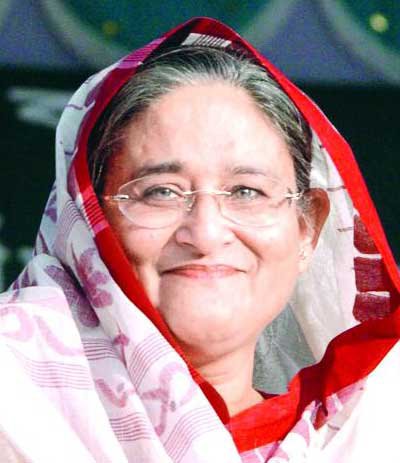
JAIPUR: Bangladesh Prime Minister Sheikh Hasina offered supplications at the dargah of Sufi saint Khwaja Moinuddin Chishti at Ajmer in Rajasthan on Wednesday, last day of her visit to India, and prayed for progress and prosperity of her country. A 17-member delegation accompanied her to the 13th century shrine.
Ms. Hasina, her son Wajid Joy, sister Sheikh Rehana, Bangladesh Foreign Minister Dipu Moni, and High Commissioner to India Tariq Kareem laid a “chadar” at the mausoleum of the Sufi saint and performed “ziarat” with the help of a hereditary “khadim” (worker), Kamaluddin Chishti, amid tight security.
Ms. Hasina spent about 50 minutes at the dargah and gifted Rs.1.50 lakh to the shrine.
As part of security arrangements, the main market outside the dargah was closed and windows of houses and hotels facing the shrine were not allowed to be opened.
Security personnel and commandos were deployed on the roof-tops of adjacent buildings.
The Anjuman Committee of Khadims and the centrally-appointed Dargah Committee welcomed Ms. Hasina and presented her with a shawl, sword, sweetmeat and “supasnama” (letter of felicitation).
The dargah, dedicated to the Sufi saint popularly known as Khwaja Gharib Nawaz, is an important pilgrimage centre. Lakhs of people belonging to various faiths visit the shrine, especially during the ‘Urs’ (death anniversary of the Khwaja) every year.
Earlier, Ms. Hasina reached the Sanganer airport by a special aircraft of the Indian Airlines with an entourage of 100. Chief Minister Ashok Gehlot received her at the airport, from where delegation left for Ajmer in two Indian Air Force helicopters. Other members of the delegation stayed in Jaipur to visiting places of tourist interest.
 This was Ms. Hasina’s first State visit to India since she became Prime Minister for the second term a year ago. She boarded a special Biman Bangladesh aircraft to leave for Dhaka after returning from Ajmer to Jaipur.
Mr. Gehlot, who saw Ms. Hasina off at the airport, congratulated her for being awarded the Indira Gandhi Prize for Peace, Disarmament and Development in New Delhi on Tuesday. He also shared with her memories of his visit to the refugee camps in Dhaka during the 1971 war for Bangladesh’s liberation.
 নষ্ট ভ্রষ্ট আমরা বাঙ্গালী জাতি
I was a war baby born in 1971, born out of sexual violence- forced impregnation. (rape)
I was adopted to Canada as a baby. Can someone please tell me more about Dhaka Mother Teresa Ophanage where I was born. Why am I here in Canada? I really need to know.
LikeLike
o my mother, i want to see you and want to know everything about you. i am freedom fighter still i am fighting against war criminals and against the killers, rappers and looter in 1971. please contact me yes mom, i will give you all the information any how. best of luck mukthi
LikeLike