rememberance

MUKTHIRGAAN

This is Mukthi, Mukthishena71, somebody called me Mokter, some one mothul, but in 1971 I have changed my name when I have joined the Liberation war as a freedom fighter. The freedom fighter of Bangladesh liberation war called Mukthi bahini / Mukthifouze / Mukthishena, just I have found the new name so no one can call me others name which is not perfect and didn’t like. I became Mukthi, Moktel Hossain Mukthi. I’m from South Akal Barish Village, Banshgadi Union under Kalkini UpaZila of Madaripur district.

Basically I have sang tagore songs in the media. Sometimes composing the music and lyricist I couldn’t anything in my life. Neither had I done anything for the people nor for my family due to my abnormality in 1975 august. Whereas, I got so many opportunity/ chances in my life that I couldn’t proper used for the people whom I loved so much. I loved father of nation Bangabandhu we couldn’t safe him & his family in 1975 being a freedom fighter that was one kind of burning fire on my heartiest c

I have cried a lot on the streets in 1975 for Bangabandhu even I was on the streets until midnight as a mad (I was in then PG Hospital under treatment of Dr. Hazera Mahtab (daughter of Late Dr. Ibrahim & wife of Dr. Fashiuddin Mahtab ) three months. the Ministry of Land allowed my job without pay of there months salary due to my abnormality.

After liberation father of nation Bangabandhu & first Prime Minister of Bangladesh Late tajuddin Ahmed had given me a job in the ministry of land in 1972.  I have worked with 11 Ministers & 9 full secretary including Abu Taher (Bangabandhu was selected him for Governor of Dhaka Division) M. Mokammel Huq, M. Keramat ALi, Golam Mostofa, jamsher Uddin Dr. Kamal Uddin Siddiqui, Md, Shahidul Alam and other so many.

It is my great pleasure that I have worked with late abdur rob serniabat, Mollah Jalal, Sri Fonibhushon Majumdar, demoted Minister Mohamed Ullah (few days President of Bangladesh)

I have beaten the police officer at Tejgaon Rail line in 1976 in absence of mind than finally central jail. The police beaten me whole night’s even put hot water to my face. Do you know why I have beaten that police officer?  Yes, which I want to tell you that police sub inspector used slang and foul language to father of nation Shahid Bangabandhu Sheikh Mujib, sheikh kamal, sheikh jamal and sheikh fazlul haque moni at that midnight while I was coming from FDC Studio. After 14 days my elder brother took out me from the custody and finally PG Hospital for mental treatment. Dr. said its not mental case, just keep him as he as wants to do.

Second thing: I was in Japan in 1992. On e day I have participated 21 February program which was arranged by Bangladesh Embassy of Tokyo, Japan. The program will be inaugurated by the Deputy High Commissioner Bangabandhu murderer Lt. Col. Rashed Choudhury instead of the High Commissioner. The ex student leader Md. Kofiluddin, Akbor, Prince, mezbah, Apu sarwar will not allow Rashed Choudhury to touch the national and black mourn flags. They made rally to protect him from the inauguration program and I was one of them to protest & postpone entire program and if killer Rashed Choudhury inaugurate the program we will not perform at the same program. High Commission called police nearby 5 hundreds of police surround us. Police commissioner came and spokes all of us, than he realized the real situation.  That was an ideals decision by all of us. The empty ground of Bengali nation will never be fulfilling without Shahid Bangabandhu & Late 4 National Leaders. I am writing the song of remembrances those heroes given the independence of Bengali nation & singing on occasionally. It is my great pleasure that I was closed to them all in 1972-1975 august 15.

More interesting some of story I’d like to tell you. Later on I was PS to Md. Noor Ali, Chairmen & Managing Director, Unique Group (1997-2001). Noor Ali was nominated by Awami League in 2001 for Nawabganj constituency. Late Agricultural Economist Shankar Goswami, President Bangladesh Student League (former APS to HPM AFM Bahauddin Nasim was the Secretary General of NASIM GOSWAMI COUNCIL) was political secretary. Shankar and I lead the entire election campaign at Nawabganj in 2001. I have written 10 songs for that election and published an album in favor of BOATS & NOOR ALI. You know 2001 National Assembly Election was engineering by the army and CIA PISI so Awami league failure to get the power.

Thereafter, it was very sad heart paining story.  Some of miscreants suddenly had attacked to Unique Group to heats NOOR ALI but he was in out only they found some of staffs and me. They hits me, kicks me as the human people some times beating the animals. They took my hair from my foreheads’. I apologized for my campaign, album & supporting Awami league. I said forgive me, I beg pardon as a freedom fighter to them. Leave me the country, I will never come and never sing any songs of Bangabandhu & Awami league.

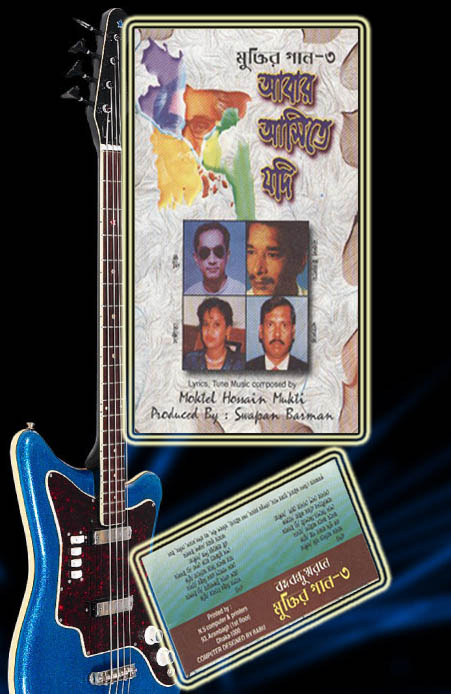
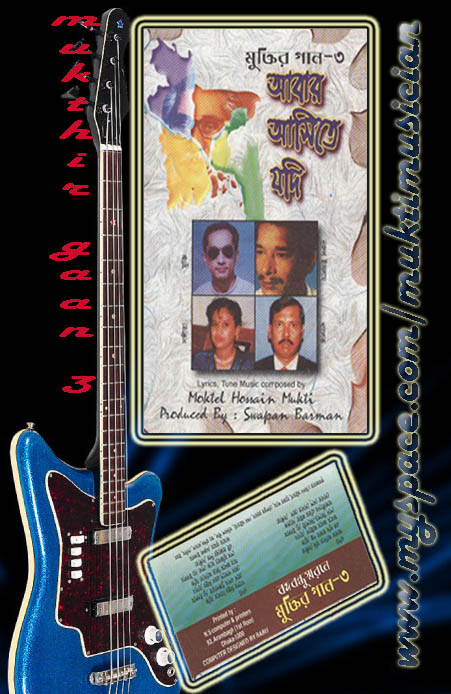
No more dear friends ……………The memorial music album of Bangabandhu “mukthir gaan” 1 2 & 3 you may listen on:

http://www.facebook.com/ekatturer.shenanee

www.facebook.com/jatirjanokbangabandhu

www.facebook.com/shadhinatha

www.facebook.com/deshratna2009

www.youtube.com/muktimusician

www.myspace.com/muktimusician

http://www.dailymotion.com/muktimusician

www.shtyle.com/muktimusician

http://amarmonmanena.webs.com

http://bangabandhuporisad.webs.com

http://muktimusician.livejournal.com

http://moktelhossainmukthi.blog.com

http://sheikhhasina.blog.com

http://thepatriosm.blog.com

http://mukthimadaripuri.blog.co.in

http://muktimusician.blog.com

http://muktimadaripuri.blogspot.com

http://muktimusician.blogspot.com

http://mukthircollection.blogspot.com

http://thefutureleaderjoy.wordpress.com

http://muktimusician.amarblog.com

http://priyo.com/muktimusician

http://muktimusician.photobucket.com

http://freedomfighters71.blogspot.com

http://bangladeshawamileague.webs.com

http://awamileaguefordemocracyandfreedom.blogspot.com

http://muktimusician.blog.co.in

http://jathirpitha.wordpress.com

http://skmujiburrahman.blogspot.com

http://skhasinawajed.blogspot.com

http://muktimusician.wordpress.com

http://muktimusician.blogspot.com

http://bd.linkedin.com/in/muktimusician

http://mukthircollection.blogspot.com

http://muktimadaripuri.blogspot.com

http://muktimusician.mediashare.com

http://ziaandrazakars.blogspot.com

http://khaledaziaandrazakars.wordpress.com

http://warcriminalsinbangladesh.wordpress.com

http://warcriminalsinbangladesh.blogspot.com

http://warcriminalnizami.blogspot.com

http://warcriminalsakachoudhury.blogspot.com

http://godfathertareqzia.blogspot.com

http://razakarnizami.blogspot.com

http://freedomfighters71.blogspot.com

http://muktimusician.picturepush.com

http://community.webshots.com/user/muktimusician

http://barristertaposhfanclub.blogspot.com

http://www.myspace.com/muktimusician

http://www.orkut.com/WARCRIMINALSINBANGLADESH

http://www.warcriminalsinbangladesh.hi5.com

http://www.facebook.com/muktimusician

http://www.picasaweb.com/muktimusician

http://www.orkut.com/muktimusician

http://www.muktimusician.hi5.com

http://www.youtube.com/deshnetree

http://www.youtube.com/muktisena71

http://www.youtube.com/nizami71

http://www.tagged.com/amibangali

http://www.tagged.com/muktimusician

http://www.tagged.com/deshratna

http://www.youtube.com/muktimusician

http://www.shtyle.com/muktimusician

http://www.facebook.com/muktimusician

www.orkut.com/muktimusician

http://www.quepasa.com/muktimusician

http://www.tagged.com/mukthimadaripuri

http://www.tagged.com/muktithegreat

http://www.tagged.com/amibangali

http://www.tagged.com/khankirpolababar

http://www.bebo.com/muktimusician

http://www.hibuu.com/muktimusician

http://www.twitter.com/muktimusician

http://www.zimbio.com/member/muktimusician

www.facebook.com/janonetree sheikh hasina

http://www.facebook.com/sheikhhasinafanclub

http://www.facebook.com/shadhinatha

http://www.facebook.com/jatirjanokbangabandhu

http://www.facebook.com/thebrokenbackbone

http://www.facebook.com/proggasrijanikhelaghor

www.blogigo.co.uk/muktimusician

http://www.facebook.com/thebrokenbackbone
 

the 75 tragedy

>MUKTISHENA IN 1971 SECTORWISE

>

Pakistani Army surrendering
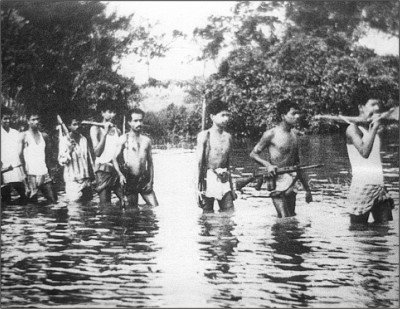
Mukti Bahini (Bengali: মুক্তি বাহিনী “Liberation Ar my”), also termed as the “Freedom Fighters”, collectively refers to the armed organizations who fought alongside the Indian Armed Forces against the Pakistan Army during the Bangladesh Liberation War. It was dynamically formed by (mostly) Bengali regulars and civilians after the proclamation of Bangladesh‘s independence on March 26, 1971. Subsequently by mid-April 1971 the former members of East Pakistan Armed Forces formed the “Bangladesh Armed Forces” and M. A. G. Osmani assumed its command. The civilian groups continued to assist the armed forces during the war. After the war “Mukti Bahini” became the general term to refer to all forces (military and civilian) of former East Pakistani origin fighting against the Pakistani armed forces during the Bangladesh Liberation War. Often Mukti Bahini operated as an effectiveguerrilla force to keep their enemies on the run. Inspired in part by revolutionary Che Guevara,[1] they have been compared to the French Maquis, Viet Cong, and the guerrillas of Josip Broz Tito in their tactics and effectiveness.
Origins
Although Mukti Bahini was formed to fight off the military crackdown by the Pakistan army on March 25, 1971 during the climax of Bangladesh freedom movement,The crisis had already started taking shape with anti-Ayub uprising in 1969 and precipitated into a political crisis at the height of Sheikh Mujibur Rahman‘s Six-point movement beginning in the 1970s. In March 1971, rising political discontent and cultural nationalism in what was then East Pakistan (later, Bangladesh) was met by harsh suppressive force from the ruling elite of the West Pakistan establishment[4] in what came to be termed Operation Searchlight.
The massive crackdown by West Pakistan forces became an important factor in precipitating the civil war as a sea of refugees (estimated at the time to be about 10million) came flooding to the eastern provinces of India. Facing a mounting humanitarian crisis, India started actively aiding and re-organising what was by this time already the nucleus of the Mukti Bahini.
The immediate precursor of the Mukti Bahini was Mukti Fauj (“Fauj” is the Urdu originally from Persian borrowed from Arabic for “Brigade” exported into several languages in South Asia including Bengali), which was preceded denominationally by the sangram parishads formed in the cities and villages by the student and youth leaderships in early March 1971. When and how the Mukti Fauj was created is not clear nor is the later adoption of the name Mukti Bahini. It is, however, certain that the names originated generically refer to the people who fought in the Bangladesh liberation war.
Since the anti-Ayub uprising in 1969 and during the height of Mujib’s six points movement, there was a growing movement among the Bengalis in East Pakistan to become independent driven by the nationalists, radicals and leftists. After the election of 1970, the subsequent crisis strengthened that feeling within the people. Sheikh Mujib himself was facing immense pressure from most prominent political quarters, especially the ultra-nationalist young student leaders, to declare independence without delay. Armed preparations were going on by some leftist and nationalist groups, and the Bengali army officers and soldiers were prepared to defect. At the call of Sheikh Mujibur Rahman the people of East Pakistan joined in a peaceful movement for non-cooperation from 3 March 1971, and 7th march and onward, which lasted up to midnight of 25 March 1971. On this date the Pakistani Army cracked down upon unarmed civilians to take control of the administration. During the army crackdown on the night of March 25, 1971, there were reports of small scale resistance notably at Iqbal Hall, Dhaka University and at the Rajarbagh Police Headquarter. The latter initially put a strong fight against the Pakistan Army. As political events gathered momentum, the stage was set for a clash between the Pakistan Army and the Bengali people vowing for independence. Bengali members of the Army were also defecting and gathering in various pockets of the country.
All these early fights were disorganized and futile because of the greater military strength of the Pakistani Army. Outside of Dhaka, resistance was more successful. The earliest move towards forming a liberation army officially came from the declaration of independence made by Major Ziaur Rahman of East Bengal Regiment on behalf of Sheikh Mujibur Rahman. In the declaration made from Kalurghat Betar Kendra (Chittagong) on March 27, 1971, Zia assumed the title of “provisional commander in chief of the Bangladesh Liberation Army”, though his area of operation remained confined to Chittagong and Noakhali areas. Major Ziaur Rahman’s declaration on behalf of Sheikh Mujibur Rahman marked a break with Pakistan by the Bengali units of the army.

Organization during war
Though prolonged Bengali resistance was not anticipated by Pakistani planners of Operation Searchlight, when the Pakistani Army cracked down upon the population, the Mukti Bahini were becoming increasingly visible. Headed by Colonel (later, General) M. A. G. Osmani, a retired Pakistani Army officer, this band was raised as Mujib’s action arm and security force before assuming the character of a conventional guerrilla force. After the declaration of independence, the Pakistani military sought to quell them, but increasing numbers of Bengali soldiers defected to the underground “Bangladesh army”. These Bengali units slowly merged into the Mukti Bahini and bolstered their weaponry.
On April 12, 1971 Colonel (later General) M. A. G. Osmani assumed the command of armed forces at Teliapara (Sylhet) headquarters. Osmani was made the commander-in-chief of Bangladesh Armed Forces on April 17, 1971. Serious initiative for organising the Bangladesh liberation army was taken between 11-17 July. In a meeting of the sector commanders in Kolkata, four important resolutions were taken in consideration of strategic aspects of the war, existing problems and future course of resistance. These were:
§  Composition and tactics of the combatants would be as follows:
§  Guerrilla teams comprising 5 to 10 trained members would be sent to specific areas of Bangladesh with specific assignments
§  Combat soldiers would carry out frontal attacks against the enemy. Between 50 and 100 per cent would carry arms. Intelligence volunteers would be engaged to collect information about the enemy. 30 percent of these people would be equipped with weapons;
§  The regular forces would be organised into battalions and sectors.
§  The following strategies would be adopted while carrying out military operations against the enemy
§  A large number of guerrillas would be sent out inside Bangladesh to carry out raids and ambushes;
§  Industries would be brought to a standstill and electricity supply would be disrupted;
§  Pakistanis would be obstructed in exporting manufactured goods and raw materials;
§  Communication network would be destroyed in order to obstruct enemy movements;
§  Enemy forces would be forced to disperse and scatter for strategic gains;
§  The whole area of Bangladesh would be divided into 11 sectors.
Other than the organizations of Mukti Bahini who were generally trained and armed by the Indian Army, there were independent guerrilla groups led by individual leaders, either nationalists or leftists, who were successfully controlling some areas.
[Regular and irregular forces

The regular forces later called Niomita Bahini (regular force) consisted of the members of the East Bengal Regiments (EBR), East Pakistan Rifles (EPR, later BDR), police, other paramilitary forces and the general people who were commanded by the army commanders in the 11 sectors all over Bangladesh. Three major forces: Z-Force under the command of Major (later, Major General) Ziaur Rahman, K-Force under Major (later Brigadier ) Khaled Mosharraf and S-Force under Major (later Major General) K M Shafiullah were raised afterwards to fight battles in efficient manners. The irregular forces, generally called Gono Bahini (people’s army), were those who were trained more in guerrilla warfare than the conventional one.
The irregular forces, which after initial training joined different sectors, consisted of the students, peasants, workers and political activists. Irregular forces were initiated inside Bangladesh province to adopt guerrilla warfare against the enemy. The regular forces were engaged in fighting the usual way.
The Mukti Bahini obtained strength from the two main streams of fighting elements: members of armed forces of erstwhileEast Pakistan and members of the urban and rural youths many of whome were volunteers. Other groups included members of sangram parishads, youth and student wings of Awami League, NAP, Leftist-Communist Parties and radical groups. The Mukti Bahini had several factions. The foremost one was organized by the members of the regular armed force, who were generally known as Freedom Fighters (FF). Then there was Bangladesh Liberation Forces (BLF) led by four youth leaders of the political wing of Sheikh Mujib’s Awami League and the third one generally known as Special Guerrilla Forces (SGF) led by the Communist Party of Bangladesh, National Awami Party, and Bangladesh Students Union. They then jointly launched guerrilla operations against the Pakistani Army causing heavy damages and casualties. This setback prompted the Pakistani Army to induct Razakars, Al-Badrs andAl-Shams (mostly members of Jamaat-e-Islami and other Islamist groups), as well as other Bengalis who opposed independence, and Biharis who had settled during the time of partition. This helped Pakistan stem the tide somewhat as the monsoon approached in the months of June and July.

Bangladesh Navy
Bangladesh Navy was constituted in August 1971. Initially, there were two ships and 45 navy personnel. These ships carried out many successful raids on the Pakistani fleet. But both of these ships were mistakenly hit and destroyed by Indian fighter planes on 10 December 1971, when they were about to launch a major attack on Mongla seaport.
[

Bangladesh Air Force
Bangladesh Air Force started functioning on 28 September at Dimapur in Nagaland, under the command of Air Commodore AK Khondakar. Initially, it consisted of 17 officers, 50 technicians, 2 planes and 1 helicopter. The Air Force carried out more than twelve sorties against Pakistani targets and was quite successful during the initial stages of the Indian attack in early December.

Independent forces
In addition, there were also some independent forces that fought in various regions of Bangladesh and liberated many areas. These included Mujib Bahini which was organized in India. Major General Oban of the Indian Army and Student League leaders Serajul Alam Khan,Sheikh Fazlul Haque Mani, Kazi Arif Ahmed, Abdur Razzak, Tofael Ahmed, A S M Abdur Rob, Shahjahan Siraj, Nur E Alam Siddiqi, and Abdul Quddus Makhon were organisers of this Bahini. There was the Kaderia Bahini under Kader Siddique of Tangail, Afsar Bahini and Aftab Bahini of Mymensingh, Latif Mirza Bahini of Sirajganj, Akbar Hossain Bahini of Jhinaidah, Quddus Molla and Gafur Bahini of Barisal, Hemayet Bahini under Hemayet Uddin of Faridpur. There were also several communist/leftist groups who clashed with the Pakistan Army, and controlled some areas independently.
Leftist factions
In addition,there were some other groups of freedom fighters which were controlled by the Leftist parties and groups including the NAP and Communist Parties. Among others, Siraj Sikder raised a strong guerrilla force which fought several battles with the Pakistani soldiers in Payarabagan, Barisal. Although there were ideological conflicts among the communist parties (most notably, split into pro-soviet and pro-Chinese factions and widespread split within the pro-Chinese faction) on deciding a common action in the context of Bangladesh Liberation, many of the individuals and leaders of Mukti Bahini were deeply influenced by the leftist ideology in general. There were strong concerns among the Indian authority and members of the Awami League led provisional government not to lose the control of the liberation war to the leftists. Nevertheless many leftists overcame these internal and external difficulties and actively participated in the Liberation war with the main nucleus of the Mukti Bahini.
Broadcast warriors
Performers at Swadhin Bangla Betar Kendra like M. R. Akhtar Mukul, Apel Mahmud (Singer), Abdul Jabbar (Singer), Mohammad Shah were great inspirations for the freedom-fighters in 1971, and were considered to be Broadcast Warriors.
we fought for freedom

MUKTHI SHENADHER MILON MELA AT KALKINI

>আওয়ামী লীগের উপদেষ্টামণ্ডলীর সদস্য আমির হোসেন আমু বলেছেন :- মেজর জেনারেল জিয়াউর রহমান প্রকৃত মুক্তিযোদ্ধা ছিলেন না। অথচ তাকে আবার স্বাধীনতার ঘোষক বানানোর চেষ্টা চলছে।
সোমবার জাতীয় গ্রন্থাগারের শওকত ওসমান মিলনায়তনে বরিশাল বিভাগ সাংস্কৃতিক ফাউন্ডেশন আয়োজিত ‘স্বাধীনতা উৎসব ২০১১’ শীর্ষক এক অনুষ্ঠানে প্রধান অতিথির বক্তব্যে তিনি এসব কথা বলেন।
আমু বলেন, জিয়াউর রহমান ২৪ মার্চ রাতে পাকিস্তানের সোয়াত জাহাজ থেকে অস্ত্র খালাস করতে গিয়েছিল। তিনি প্রকৃত মুক্তিযোদ্ধা ছিলেন না। এখন তাকে স্বাধীনতার ঘোষক বানানোর চেষ্টা চলছে। সকলের কাছে প্রশ্ন রেখে আমু আরো বলেন, যিনি পাকিস্তানের সোয়াত জাহাজ থেকে অস্ত্র খালাস করতে পারেন তিনি কীভাবে মুক্তিযোদ্ধা হয় ?
যুদ্ধাপরাধীদের বিচারে ষড়যন্ত্র চলছে মন্তব্য করে তিনি বলেন, যুদ্ধাপরাধীদের বিচার নিয়েও নানা ষড়যন্ত্র চলছে। বিএনপি যুদ্ধাপরাধীদের পক্ষ নিয়ে নানা ষড়যন্ত্র করছে। তাদের ষড়যন্ত্র খুবই প্রকট।
৭৫ পরবর্তী ২১ বছর পাকিস্তানিদের দোসররা দেশ পরিচালনা করেছে উল্লেখ করে তিনি বলেন, লে. জে নিয়াজী তাই লন্ডনে ১৯৭৭ সালে এক সাংবাদিক সম্মেলনে বলেছিলেন, আমরা চলে আসলেও সেখানে আমাদের সন্তানেরা দেশ (বাংলাদেশ) শাসন করছে।
জাতীয় সংসদের হুইপ আ স ম ফিরোজ বলেন, বিএনপি ও মুক্তিযুদ্ধের বিপক্ষ শক্তিগুলো যুদ্ধাপরাধীদের পক্ষ নিয়েছে। যুদ্ধাপরাধীদের বিচার যতদিন হবে না ততদিন আন্দোলন চলবে। তাদেরকে রাজনৈতিকভাবে চিরদিনের জন্য নিশ্চিহ্ন করার প্রত্যয় নিয়ে আমাদের এগিয়ে যেতে হবে।

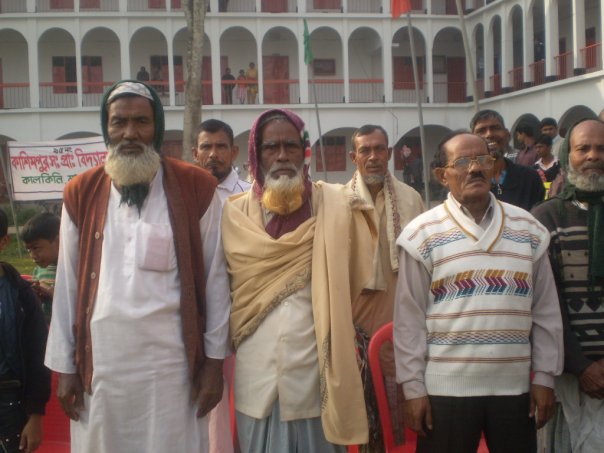
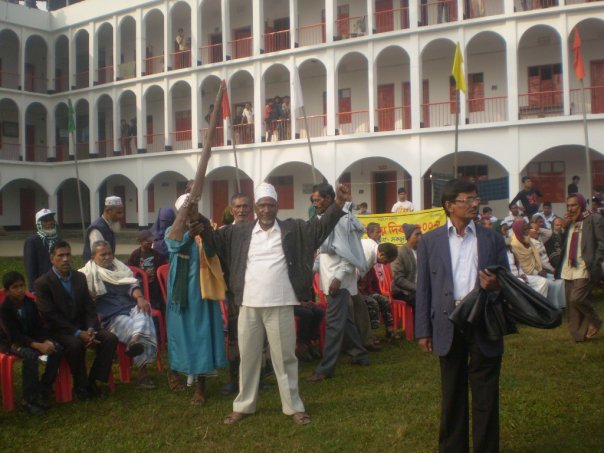
Freedom Fighter Abdul Mannan Talukdar in The Victory Day 2009, upazila administration celebrated the freedom fighters at Syed Abul Hossain University College ground.

My field commander Md.Sikim Ali, Subedhar Naek (Ex Military gunner in the middle) The Victory Day 2009, upazila administration celebrated the freedom fighters at Syed Abul Hossain University College ground.

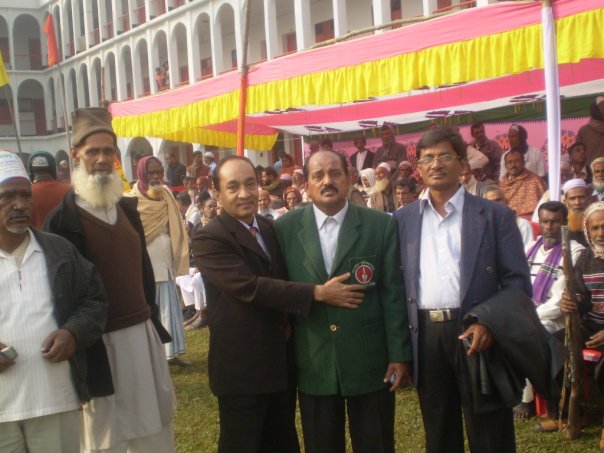
I embraced  Kalkini Thana Commander Md. Mojibur Rahman & Freedom Fighter Abdul Mannan Talukdar in The Victory Day 2009, upazila administration celebrated the freedom fighters at Syed Abul Hossain University College ground.
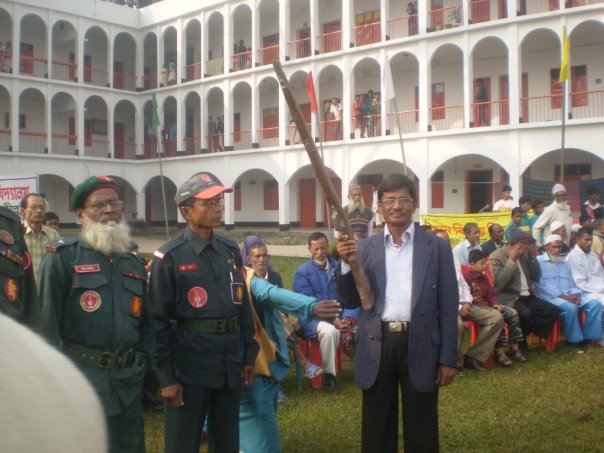
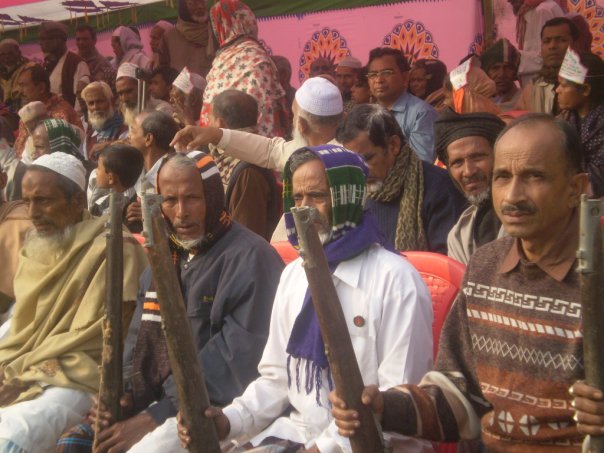
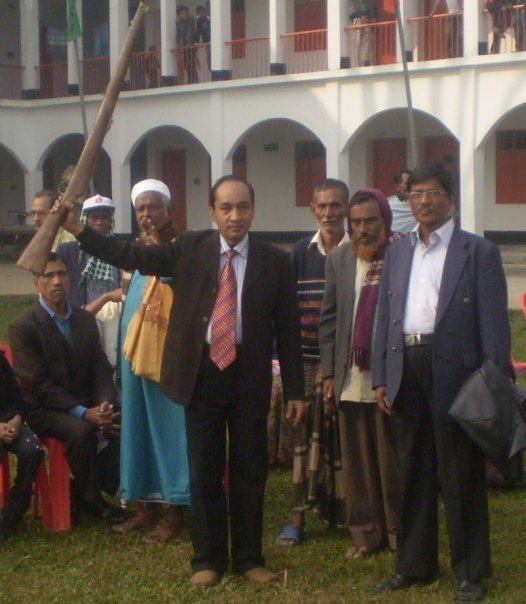
All the Freedom Fighters with the old 3/3 rifles in The Victory Day 2009, upazila administration celebrated the freedom fighters on the victory day 2009 at syed abul hossain university college ground.
the 75 tragedy

>71 er hathiar gorje utthuk ar ekbar

>

Me & my best friend Freedom Fighter Abdul Mannan Talukdar in The Victory Day 2009, upazila administration celebrated the freedom fighters on the victory day 2009 at syed abul hossain university college ground.

 Freedom Fighter Akon Mohamed Mosharraf Hossain & Abdul Mannan Talukdar in The Victory Day 2009, upazila administration celebrated the freedom fighters on the victory day 2009 at syed abul hossain university college ground.

the 75 tragedy

>The Backgound of 25th March Midnight Genocide

>

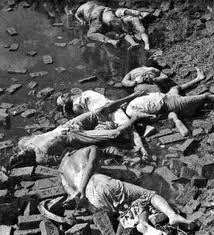
Operation Searchlight : The Background of 25th March Genocide Posted by xanthis on March 25, 2008 The night of massacre, 25th March 1971, was a complete military operation by Pakistan Army, officially named Operation Searchlight. The idea of this operation came to some of senior Generals after massive demonstration of East Pakistanis on 21st February 1971. This is one of very few military operations in post World War II history which ultimately had been planned against civilians, just to kill a smart percentage of them and to scare survivors. The concept of Operation Searchlight was inspired by the My Lai massacre that U.S. Army did in Vietnam. The plan was drawn up in March 1971 by Maj.Gen. Khadim Hussain Raza and Maj.Gen. Rao Farman Ali, as a result of a meeting between Pakistani army staff on the 22nd of February. Senior Pakistani officers in East Pakistan who were unwilling to support any military attack on civilians, Lt.Gen. Shahabzada Yakub Khan, GOC East Pakistan, and the governor Vice Adm. Ahsan, were relieved of their duties. As a replacement of these two officials, Lt.Gen. Tikka Khan was made both the Governor and GOC of East Pakistan. On March 17, Gen. Khadim Hussain Raza was given the go ahead to plan for the crackdown via telephone by Gen. Hamid, COS Pakistan Army. On the morning of March 18, Gen. Raza and Maj.Gen. Rao Farman Ali put the details to paper at the GOC’s office at Dhaka cantonment. The plan was written on a light blue office pad with a lead pencil by Gen. Farman containing sixteen paragraphs spread over five pages. Gen. Farman wrote out the operational premises and conditions for success, while Gen. Khadim dealt with the distribution of forces and particular tasks of the individual brigades and other units. Planners took this to consideration that the Bengali officers and other military or para-military units will revolt at the onset of operations. To minimize that risk, it was suggested that all Bengali armed units like Police, Riffles (EPR) should be disarmed and the political leadership arrested during their meeting with the President, Gen. Yahya Khan. No operational reserves were earmarked. Though the draft asked to disarm Police, EPR units, thousands of unarmed Police men & EPR troops were massacred inside Dhaka’s Police lines at Rajarbag & EPR Headquarters at Pilkhana. <!–[if gte vml 1]> <![endif]–><!–[if !vml]–>The handwritten plan was read out to Gen. Hamid and Lt.Gen. Tikka Khan on the 20th of March at the flag staff house. Gen. Hamid objected to the immediate disarming of regular army Bengali units but approved the disarming of EPR, armed police and other para-military formations. In the initial draft of the massacre plan, Pakistan’s genius Generals like Gen. Farman suggested that Awami League leaders could be arrested amid the ongoing dialogue with Gen. Yahya, but another genius Yahya Khan refused it, proved he is at least wiser than Gen. Farman . After frequent verification & scrutiny, the amended plan was approved and the operational plan was distributed to various area commanders on the 24th and the 25 March daytime, when a group of Pakistani Generals, accompanied by Gen. Hamid, Gen. Mittha, the QMG, and Col. Saadullah, PSO, visited the major garrisons via helicopter and personally briefed the various garrison commanders or senior West Pakistani officers on the operation. Gen. Mittha was the chief of the Special Services Group (SSG Commandos). SSG was given the vital role of the most dramatic chapter of total plan, the arrest of Sheikh Mujibur Rahman. Maj.Gen. Qamar Ali Mirza, and Brig.Gen. Harrison later arrived from West Pakistan to assist Gen. Mittha for arranging the logistical details, mainly because the non cooperation program by Awami League was causing immense impact including hampering food supplies to the military. Secrecy was maintained at extreme strictness, only a few junior commissioned officers learned about the plan beforehand on a need to know basis. Some Bengali officers had become suspicious of the all West Pakistani officer briefings. Later it showed that some of Bengali officers initiated revolts as a confused advance from their suspicions. The Operation started on the night of 25 March, 1971 in Dhaka, and other garrisons were to be alerted via phone about their zero hour to start their operations. Gen. Farman Ali commanded the forces in Dhaka, while the rest of the province was commanded by Gen. Khadim himself. Lt.Gen. Tikka Khan and his staff were present in the 31st field command center, to supervise and support the command staff of the 14th division inside Dhaka Cantonment. To the time of leaving Dhaka for Karachi, Zulfikar Ali Bhutto accompanied Gen. Tikka Khan inside the cantonment. While observing the massacre under name of ‘Operation Searchlight’, Zulfikar Ali at a moment showed interest to be taken with a military unit see what is happening in the city and asked for Gen. Tikka’s consent. Gen. Tikka refused him showing no reason.
the 75 tragedy

>why Bangladesh?

>

WHY BANGLADESH? The Bengalis’ demand for independence had been forced upon the people of East Pakistan by the savage and atrocious action of the West Pakistani army government. What the Bengalis had really been wanting were regional autonomy and social and economic justice. Recent events have conclusively proved that there was no plan for secession and there was no armed preparation on the part of the Bengalis to achieve that. They were confidently expecting a good result from President Yahya Khan’s democratic gesture. But the West Pakistani army, through its systematic butchery of unarmed civilians, forced the Bengalis to take the ultimate decision-to become a completely independent sovereign state. A clear cut line has been drawn decisively, separating the Bengali speaking people of the East and the people of West Pakistan. The decision was inevitable because of the continuous exploitation of the East by the West. To the world it naturally did not come as a surprise. On the other hand many voices had been predicting it for a long time. Besides religion, there was nothing common between these two people. Ethnically, culturally, in their thought, language, way of life-in everyway they were two nations. There was no attempt towards reconciliation but only economic exploitation and social injustice. East Pakistan existed only for the benefit of the West Pakistani capitalist merchants, industrialists and contractors, for the militarists and civil bureaucrats. For the last 24 years the Pakistan Government, manned mostly by West Pakistanis, dominated the state policy aiming to develop the barren deserts of West Pakistan by a deliberate policy which impoverished East Pakistan. Cleverly enough, Pakistan Government tried its best not to reveal the figures separately to show the gross disparity. Nevertheless, from available figures, mostly official, the truth could not be kept concealed. AVERAGE ANNUAL BUDGET Total Revenue Rs. 6,000 million W.P. E.P. Expenditure on Defence Total 60% 50% 10 % Civil Expenditure Total 40 % 25% 15% While E.P. provides 60% of the total revenue, it receives only about 25% for its expenditure and West Pakistan providing 40% in the central exchequer receives 75% of the remaining. FOREIGN TRADE & EXCHANGE EARNINGS During 10 year period 1958-68 West Pakistan East PakistanExport Import Export Import£820 m £2,315 m £1,153 m £1,000 m 41% 70 % 59% 30% In foreign trade East Pakistan exports constitute 59 % of the total but imports only 30% of the imports which consists of consumer goods and food, very little is left for development projects. During the same period West Pakistan earned 41 % of the total foreign exchange and was allowed 70% of the foreign exchange earnings. Major portion of this was spent on various development projects in West Pakistan. INTER ZONAL TRADE 1964-1969 Exports from West to East Pakistan Rs. 5,292 million Exports from East to West Pakistan Rs. 3,174 million This is an example of continuous drain of East Pakistani capital to West Pakistan. It has been estimated that total transfer of resources from East Pakistan to West Pakistan since 1947 had been £3,000 million. Let us look at typical Export items for the year 1964-65: Rs. Jute and jute products (all from East Pakistan): 124,580 m Cotton & cotton manufactures (many from W.P.): 51,880 m Hides & Skins (mainly from East Pakistan): 6,130 m Tea (all from East Pakistan): 1,000 m Wool (all from West Pakistan): 7,300 m Others (East & West together): 56,200 m PERCENTAGE OF ALLOCATION OF FUNDS FOR DEVELOPMENT PROJECTS Item West Pakistan East Pakistan Foreign Exchange for various developments: 80 % 20% Foreign Aid (excluding U.S. AID): 96% 4% U.S. Aid: 66% 34% Pakistan Industrial Development Corporation: 58% 42% Pakistan Industrial Credit & Investment Corporation: 80% 20% Industrial Development Bank: 76% 24% House Building: 88% 12% ———- ——— 77 % 23% Above figures are clearly indicative for the tremendous industrial growth in West Pakistan which received 77% of the total development expenditure for its 40% of the total population. FOREIGN AID TO PAKISTAN Chinese loan to Pakistan U.S. $ 60 m in 1965 mostly spent in West Pakistan including a Heavy Machinery Complex costing U.S. $ 9 m, but only U.S. $ 125,000 for East Pakistan Water & Power Development. But the loan is to be repaid by exporting jute and jute products. World Bank credits in 1954 $ 14 m and in 1965 $ 15 m for Sui Gas Project in West Pakistan. Same source supplied $ 17 m in 1964 for Karachi Port Deve­lopment and $ 30 m to Pakistan Investment and Credit Corporation to finance mostly projects in West Pakistan. International Development Association (U.N. Agency) gave a credit of $ 8.5 m to West Pakistan and $ 4.5 m to East Pakistan in 1964 for educational projects. Russian Aid of £ 11 m to £ 18 m was given to West Pakistan in 1965 for oil prospecting. U.K. Loan during the period 1947-1965 amounted to £ 64 m has been spent mostly in West Pakistan. U.S. Aid of $ 3.6 billion-$ 2.7 billion spent for Mangla Dam & Tarbela Dam in West Pakistan and only $ 0.9 billion for control of flood in East Pakistan. These loans no doubt converted the barren lands of West Pakistan into fertile ones whereas very little was done to tackle effectively the flood problem of East Pakistan-the most fertile land in the world. The people of East Pakistan had been allowed to suffer from recurring cyclones and flood disasters since 1953. COMPARATIVE INDUSTRIAL DEVELOPMENT West Pakistan East Pakistan Established INDUSTRIAL in both wings 1947-48 1966-67 1947-48 1966-67 Cot-.on Textile production in million yds 350 6,836 508 550 1,853% increase 8.26% increase Sugar production in ‘ 000 tons 10 304 25 112 2,940 % increase 348 % increase Cement production in ‘000 tons 305 1,934 46 75 534% increase 63 % increase Above tables clearly show how the established industries in East Pakistan had been allowed to grow extremely slowly in comparison with the extremely fast growing industries in the West. With the influx of capitalists from Bombay the picture began to change rapidly. In the field of new industries, the percentage of investments in West and East Pakistan is roughly 75% and 25% respectively. Moreover, East Pakistani industries are mainly owned and controlled by the West Pakistanis whose main interest is to transfer the profits to West Pakistan instead of helping East Pakistan’s prosperity. It has been calculated that since 1947 the real transfer of resources from East to West has been to the tune of £ 3,000 million. There was no state control over private investment and as such the flow had been completely unchecked. Steel-the basic item required for any development-is now being produced in two mills in West & East Pakistan. Funds provided for these mills were £ 56 million for West Pakistan and £ 11 million for East Pakistan. AGRICULTURAL DEVELOPMENT West Pakistan East Pakistan Fertiliser distribution during 1964-68, in ‘ 000 nutrient tons 739 66 % 371 33% Improved seed distribution during 1964-69, in ‘ 000 tons 342 89 % 40 11 % 1951-52 1966-67 1951-52 1966-67 Increase in fish production in ‘ 000 mts 56 153 175 259 273 % increase 48 % increase Distribution of tractors Wheel type (numbers) 20,069 1,825 Other large (numbers) 2,000 350 91% 9% Needless to mention that the agricultural land in East Pakistan has more acreage and most lands produce 2 to 3 crops a year, whereas in the West the acreage is less and the productivity per acre is much smaller. One fails to understand the logic in these state of affairs. In agriculture finance, the Pakistan Agricultural Development Bank has lent over Rs. 600 million, but most of these went to West Pakistani farmers. Most of the large irrigation projects have been treated as federal projects and financed by the Central Government and has been completed in West Pakistan. This was a deliberate attempt to keep the 75 million Bengalis at starvation level. In the federal army of 500,000 only 20,000 are Bengalis. Those 480,000 West Pakistanis spend their income in the West which indirectly help the economy of that part of the country. Economic experts have evidence that in 1959 an average East Pakistani was 20% worse off than another in the West. In 1968, he was 40% worse off than his brother in Islam in West Pakistan. POWER DEVELOPMENT Another criterion to measure progress is the consumption of electric power per head of the population. In Pakistan growth in power production has grown considerably. West Pakistan generates by hydel, thermal and other means a total of 838,000 KW (83% of the total) whereas East Pakistan generates 179,500 KW (17% of the total). A great share of foreign aid had been spent on various power development projects. Two giant irrigation and power development projects in Indus Basin cost $ 1800 million and WAPDA spent Rs. 1453 m in 5 years 1959-64. EDUCATION: Progress in 20 years Area West Pakistan East Pakistan 1947-48 1968-69 1947-48 1968-69 Primary Schools 8,413 39,418 29,663 28,308 Number increase Number decreases in spite 4 times of increased children 1947-48 1965-66 1947-48 1965-66 Secondary Schools 2,598 4,472 3,481 3,964 176% 114% increase increase 1947-48 1968-69 1947-48 1968-69 Colleges-various Types 40 271 50 162 675% 320% increase increase Medical/Engineering/ Agricultural colleges 4 17 3 9 425% 300% increase increase Universities 2 1 (654 scholars) (1620 scholars) 6 4 (18.708 scholars) (8,831 scholars) Increase in scholars 30 times 5 times It is interesting to note that although the school going population increased in East Pakistan the number of schools decreased through deliberate policy of neglect, whereas during the same period the Pakistan government spent vast sums of money and increased the number of schools in West Pakistan by 4} times. Was not that a systematic plan for giving the West Pakistani children a better academic start so that their future career was firmly assured? The natural result was the vast increase in the number of colleges of all kinds and universities. This is a clear evidence of Government policy aiming at keeping the East Pakistani children intellectually inferior by not providing the facilities they deserve. The end product that we see is in the number of University scholars. In East Pakistan, which had double the number of scholars in 1947, the number only increased by five times in 20 years and in West Pakistan the corresponding increase is thirty times. In the field of research and development centres established for agricultural, medical, scientific, industrial research. out of 16 centres 13 are located in West Pakistan. As far as the scholarships and training grants for studies abroad under Colombo Plan, Ford Foundation. Cotnmonwealth Aid and many others the bulk of these go to the West Pakistanis. Some of these are not even advertised in the East Pakistani press and many of these are awarded directly from West Pakistan. If we consider the question of employment, we can see the repetition of the same injustice. While the state policy on education had kept the East Pakistanis less developed, in the case of recruitment in civil, military and other services the same policy of depriving the Bengalis had been effectively carried out. Having most of the recruitment centres, they have the most advantage. Headquarters of the army, navy, air force and all central government services as well as private employees of all kind are located in West Pakistan. Most of the vacancies are either not advertised in the East Pakistani press or the practical difficulty of being interviewed is present. Moreover, the various recruitment boards consisting mostly of West Pakistanis are not so well disposed to accept an East Pakistani. In the armed forces, by making a physical standard far too high for an average Bengali, the system of eliminating the Bengali candidates had been very easy and successful. The following figures show some examples of disparity in this field: West Pakistan East Pakistan Central Civil Service 84% 16% Foreign Service 85% 15% Foreign Head of Missions (numbers) 60 9 Army 95% 5% Army: Officers of General Rank (Numbers) 16 1 Navy Technical 81% 19% Navy-non technical 91% 9% Air Force Pilots 89% 11% Armed Forces (Numbers) 500,000 20,000 Pakistan Airlines ,, 7,000 280 P.I.A. Directors ,, 9 1 P.I.A. Area Managers ,, 5 none Railway Board Directors „ 7 1 ORGANISATIONAL IMBALANCE The selection of the capital of Pakistan in Karachi in 1947 gave the West a boost to growth in all spheres. Rs. 200 million was spent on its development and when it was fully developed it was handed over to the West Pakistan provincial government. All incomes derived as a result went to the provincial government. Thereafter another Rs. 200 million was allocated for the capital development at Islamabad. A sum of only Rs. 20 million was provided for a second capital at Dacca, in East Pakistan. All the offices of the central government are located in the West including the headquarters of the army, navy and airforce and all the military academies. It is important to note that 60% of Pakistan’s budget is spent on defence and 80% of that goes to the military contractors, armed personnel who are West Pakistanis. Head offices of all the public and private establishments, e.g., State Bank of Pakistan, Pakistan International Airlines, National Bank of Pakistan and other banks, Insurance companies, Pakistan Industrial Development Corporation, National Shipping Corporation, Foreign Missions and hundred other Pakistani and foreign agencies have their head offices in West Pakistan and with their West Pakistani bosses and West Pakistani connections made sure that the policies of those organi­sations favour West Pakistanis. SOCIAL WELFARE In the field of social welfare, the same pattern is reflected. Let us look at some of the statistics comparing the two wings. West Pakistan East Pakistan Population 55 million 75 million Total number of doctors 12,400 7,600 Total number of Hospital beds 26,000 6,000 Rural Health Centres 325 88 Urban Community Development Centres 81 52 East Pakistan has been described as one of the poorest country in the world. Even the economists, impartial and foreign, admitted that. How does the average East Pakistani compare with his compatriat in West Pakistan? West Pakistan East Pakistan Rural Urban Rural Urban Employment of civil labour force 59 % 41 % 86% 14% In West Pakistan the industrial development provided 41 % of the total labour force, employment and a better standard of life. In East Pakistan, the poor development in industrial sphere made only 14% of the total employment available in the cities. The result is reflected in the figures for per capita income and gross domestic product. West Pakistan East Pakistan 1960 1970 1960 1970 Per Capita income in Pakistan Rupees 355 492 269 308 The difference in per capita income between East and West Pakistan had been 86 in 1960. Ten years later the difference sored to 184. In other words while the standard of living had been increasing in the West it had been declining in East Pakistan. West Pakistan East Pakistan 1959-60 1964-65 1959-60 1964-65 Gross domestic product per capital 312 391 242 297 Staple food of East Pakistani is rice and of West Pakistani is wheat. Let us compare the market price of the two. West Pakistan East Pakistan Rice per mound (82 lbs) Rs. 18 Rs. 50 Wheat per mound (82 Ibs) Rs. 10 Rs. 35 How could one expect a better health standard when the East Pakistani has to pay a far higher price for his food when his income is far below that of his compatriot in the West? The picture becomes clearer when we compare the average calories intake in rural areas. West Pakistan East Pakistan Calorie intake in rural areas in 1960-65 per head per day 1,625 1,556 In the urban areas the disparity is even greater. (Calorie intake in U.K. is 3,250). These facts and figures, backed by current available statistics, prove that East Pakistan is economically viable. The necessary resources vital for the development of a country are present, though undeveloped. Given substantial foreign aid, and opportunities to develop its natural resources, there is no reason why Bangla Desh should not be self-sufficient in course of time. World powers must realise that since Bangla Desh is fully capable of attaining economic stability, the right of self­determination, vital to her very existence, can no longer be denied.Above all, the injustice meted out to her, the social and economic neglect that was her share over the past two decades, justifies in all fairness that she be given the right to govern herself.—————————————————————————————— All these statistics have been taken from official and other reliable sources which include : National Planning Commission, 20 Years of Pakistan, Central Bureau of Education, Depart­ment of Investment Promotion, Central Board of Revenue, Central Statistical Office, Pakistan Year Book, 1970, Marine Fisheries Department, Pakistan Economic Survey, Government of Pakistan Budgets, Keesing’s Contemporary Archives, Financial Times, The Economist, Developponent Prospects of Pakistan (by a Norwegian Economist).

Information

25th march 1971:Operation Searchlight

:The Background of 25th March Genocide Posted by xanthis on March 25, 2008

the genocide bangali 1971

The night of massacre, 25th March 1971, was a complete military operation by Pakistan Army, officially named Operation Searchlight. The idea of this operation came to some of senior Generals after massive demonstration of East Pakistanis on 21st February 1971. This is one of very few military operations in post World War II history which ultimately had been planned against civilians, just to kill a smart percentage of them and to scare survivors. The concept of Operation Searchlight was inspired by the My Lai massacre that U.S. Army did in Vietnam. The plan was drawn up in March 1971 by Maj.Gen. Khadim Hussain Raza and Maj.Gen. Rao Farman Ali, as a result of a meeting between Pakistani army staff on the 22nd of February. Senior Pakistani officers in East Pakistan who were unwilling to support any military attack on civilians, Lt.Gen. Shahabzada Yakub Khan, GOC East Pakistan, and the governor Vice Adm. Ahsan, were relieved of their duties. As a replacement of these two officials, Lt.Gen. Tikka Khan was made both the Governor and GOC of East Pakistan. On March 17, Gen. Khadim Hussain Raza was given the go ahead to plan for the crackdown via telephone by Gen. Hamid, COS Pakistan Army. On the morning of March 18, Gen. Raza and Maj.Gen. Rao Farman Ali put the details to paper at the GOC’s office at Dhaka cantonment. The plan was written on a light blue office pad with a lead pencil by Gen. Farman containing sixteen paragraphs spread over five pages. Gen. Farman wrote out the operational premises and conditions for success, while Gen. Khadim dealt with the distribution of forces and particular tasks of the individual brigades and other units. Planners took this to consideration that the Bengali officers and other military or para-military units will revolt at the onset of operations. To minimize that risk, it was suggested that all Bengali armed units like Police, Riffles (EPR) should be disarmed and the political leadership arrested during their meeting with the President, Gen. Yahya Khan. No operational reserves were earmarked. Though the draft asked to disarm Police, EPR units, thousands of unarmed Police men & EPR troops were massacred inside Dhaka’s Police lines at Rajarbag & EPR Headquarters at Pilkhana. <!–[if gte vml 1]> <![endif]–><!–[if !vml]–>The handwritten plan was read out to Gen. Hamid and Lt.Gen. Tikka Khan on the 20th of March at the flag staff house. Gen. Hamid objected to the immediate disarming of regular army Bengali units but approved the disarming of EPR, armed police and other para-military formations. In the initial draft of the massacre plan, Pakistan’s genius Generals like Gen. Farman suggested that Awami League leaders could be arrested amid the ongoing dialogue with Gen. Yahya, but another genius Yahya Khan refused it, proved he is at least wiser than Gen. Farman . After frequent verification & scrutiny, the amended plan was approved and the operational plan was distributed to various area commanders on the 24th and the 25 March daytime, when a group of Pakistani Generals, accompanied by Gen. Hamid, Gen. Mittha, the QMG, and Col. Saadullah, PSO, visited the major garrisons via helicopter and personally briefed the various garrison commanders or senior West Pakistani officers on the operation. Gen. Mittha was the chief of the Special Services Group (SSG Commandos). SSG was given the vital role of the most dramatic chapter of total plan, the arrest of Sheikh Mujibur Rahman. Maj.Gen. Qamar Ali Mirza, and Brig.Gen. Harrison later arrived from West Pakistan to assist Gen. Mittha for arranging the logistical details, mainly because the non cooperation program by Awami League was causing immense impact including hampering food supplies to the military. Secrecy was maintained at extreme strictness, only a few junior commissioned officers learned about the plan beforehand on a need to know basis. Some Bengali officers had become suspicious of the all West Pakistani officer briefings. Later it showed that some of Bengali officers initiated revolts as a confused advance from their suspicions. The Operation started on the night of 25 March, 1971 in Dhaka, and other garrisons were to be alerted via phone about their zero hour to start their operations. Gen. Farman Ali commanded the forces in Dhaka, while the rest of the province was commanded by Gen. Khadim himself. Lt.Gen. Tikka Khan and his staff were present in the 31st field command center, to supervise and support the command staff of the 14th division inside Dhaka Cantonment. To the time of leaving Dhaka for Karachi, Zulfikar Ali Bhutto accompanied Gen. Tikka Khan inside the cantonment. While observing the massacre under name of ‘Operation Searchlight’, Zulfikar Ali at a moment showed interest to be taken with a military unit see what is happening in the city and asked for Gen. Tikka’s consent. Gen. Tikka refused him showing no reason.

the genocide bangali

Information

Early life of Bangabandhu

bangabandhu Sheikh Mujibur Rahman

Sheikh Mujibur Rahman (Bengali: শেখ মুজিবুর রহমান Shekh Mujibur Rôhman) (March 17, 1920 – August 15, 1975) was a Bengali politician and the founding leader of the People’s Republic of Bangladesh, generally considered in the country as the father of the Bengali nation. He headed the Awami League, served as the first President of Bangladesh and later became its Prime Minister. He is popularly referred to as Sheikh Mujib, and with the honorary title of Bangabandhu (বঙ্গবন্ধু Bôngobondhu, “Friend of Bengal”). His eldest daughter Sheikh Hasina Wajed is the present leader of the Awami League and the current Prime Minister of Bangladesh.

A student political leader, Mujib rose in East Pakistani politics and within the ranks of the Awami League as a charismatic and forceful orator. An advocate of socialism, Mujib became popular for his leadership against the ethnic and institutional discrimination of Bengalis. He demanded increased provincial autonomy, and became a fierce opponent of the military rule of Ayub Khan. At the heightening of sectional tensions, Mujib outlined a 6-point autonomy plan, which was seen as separatism in West Pakistan. He was tried in 1968 for allegedly conspiring with the Indian government but was not found guilty. Despite leading his party to a major victory in the 1970 elections, Mujib was not invited to form the government.

After talks broke down with President Yahya Khan and West Pakistani politician Zulfikar Ali Bhutto, Sheikh Mujib on 26 March, 1971 announced the declaration of independence of East Pakistan and announced the establishment of the sovereign People’s Republic of Bangladesh. Subsequently he was arrested and tried by Rahimuddin Khan in a military court during his nine month detention. Guerrilla war erupted between government forces and Bengali nationalists aided by India. An all out war between the Pakistan Army and Bangladesh-India Joint Forces led to the establishment of Bangladesh, and after his release Mujib assumed office as a provisional president, and later prime minister. Even as a constitution was adopted, proclaiming socialism and a secular democracy, Mujib struggled to address the challenges of intense poverty and unemployment, coupled with rampant corruption. Amidst rising popular agitation, he banned other political parties and established a one party state. After only seven months, Mujib was assassinated along with most of his family by a group of army officers.

EARLY LIFE OF BANGABANDHU SK. MUJIB

Sk. Mujib, a student leader in 1949. Sk.Mujib was born in Tungipara, a village in Gopalganj District in the province of Bengal, to Sheikh Lutfar Rahman, a serestadar, an officer responsible for record-keeping at the Gopalganj civil court. He was the third child in a family of four daughters and two sons. In 1929, Rahman entered into class three at Gopalganj Public School, and two years later, class four at Madaripur Islamia High School. However, Mujib was withdrawn from school in 1934 to undergo eye surgery, and returned to school only after four years, owing to the severity of the surgery and slow recovery.[citation needed] At the age of eighteen, Mujib married Begum Fazilatnnesa. She gave birth to their two daughters—Sheikh Hasina and Sheikh Rehana—and three sons—Sheikh Kamal, Sheikh Jamal and Sheikh Russel.

Mujib became politically active when he joined the All India Muslim Students Federation in 1940. He enrolled at the Islamia College (now Maulana Azad College), a well-respected college affiliated to the University of Calcuttato study law and entered student politics there. He joined the Bengal Muslim League in 1943 and grew close to the faction led by Huseyn Shaheed Suhrawardy, a leading Bengali Muslim leader. During this period, Mujib worked actively for the League’s cause of a separate Muslim state of Pakistan and in 1946 he was elected general secretary of the Islamia College Students Union. After obtaining his degree in 1947, Mujib was one of the Muslim politicians working under Suhrawardy during the communal violence that broke out in Calcutta, in 1946, just before the partition of India.

On his return to East Bengal, he enrolled in the University of Dhaka to study law and founded the East Pakistan Muslim Students’ League and became one of the most prominent student political leaders in the province. During these years, Mujib developed an affinity for socialism as the ideal solution to mass poverty, unemployment and poor living conditions.[citation needed] On January 26, 1949 the government announced that Urdu would officially be the state language of Pakistan. Though still in jail, Mujib encouraged fellow activist groups to launch strikes and protests and undertook a hunger strike for 13 days.[citation needed] Following the declaration of Muhammad Ali Jinnah and the province chief minister Khwaja Nazimuddin in 1948 that the people of East Pakistan, mainly Bengalis, would have to adopt Urdu as the state language, agitation broke out amongst the population. Mujib led the Muslim Students League in organising strikes and protests, and was arrested along with his colleagues by police on March 11.[9][10] The outcry of students and political activists led to the immediate release of Mujib and the others. Mujib was expelled from the university and arrested again in 1949 for attempting to organize the menial and clerical staff in an agitation over workers’ rights.

EARLY POLITICAL CAREER

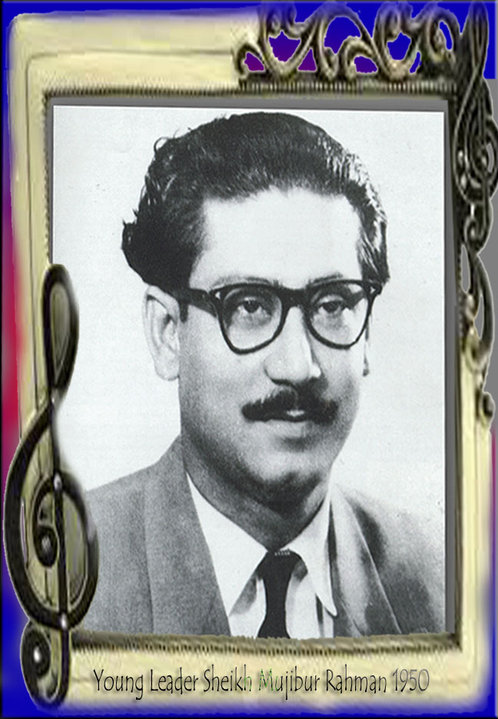
Sheikh Mujib, 1950Mujib launched his political career, leaving the Muslim League to join Suhrawardy and Maulana Bhashani in the formation of the Awami Muslim League, the predecessor of the Awami League. He was elected joint secretary of its East Pakistan unit in 1949. While Suhrawardy worked to build a larger coalition of East Pakistani and socialist parties, Mujib focused on expanding the grassroots organisation.[citation needed] In 1951, Mujib began organising protests and rallies in response to the killings by police of students who had been protesting against the declaration of Urdu as the sole national language. This period of turmoil, later to be known as the Bengali Language Movement, saw Mujib and many other Bengali politicians arrested. In 1953, he was made the party’s general secretary, and elected to the East Bengal Legislative Assembly on a United Front coalition ticket in 1954. Serving briefly as the minister for agriculture, Mujib was briefly arrested for organizing a protest of the central government’s decision to dismiss the United Front ministry. He was elected to the second Constituent Assembly of Pakistan and served from 1955 to 1958. During a speech in the assembly on the proposed plan to dissolve the provinces in favour of an amalgamated West Pakistan and East Pakistan with a powerful central government, Mujib demanded that the Bengali people’s ethnic identity be respected and that a popular verdict should decide the question:

“Sir [President of the Constituent Assembly], you will see that they want to place the word “East Pakistan” instead of “East Bengal.” We had demanded so many times that you should use Bengal instead of Pakistan. The word “Bengal” has a history, has a tradition of its own. You can change it only after the people have been consulted. So far as the question of one unit is concerned it can come in the constitution. Why do you want it to be taken up just now? What about the state language, Bengali? We will be prepared to consider one-unit with all these things. So I appeal to my friends on that side to allow the people to give their verdict in any way, in the form of referendum or in the form of plebiscite.

In 1956, Mujib entered a second coalition government as minister of industries, commerce, labour, anti-corruption and village aid, but resigned in 1957 to work full-time for the party organization. When General Ayub Khan suspended the constitution and imposed martial law in 1958, Mujib was arrested for organising resistance and imprisoned till 1961. After his release from prison, Mujib started organising an underground political body called the Swadhin Bangal Biplobi Parishad (Free Bangla Revolutionary Council), comprising student leaders in order to oppose the regime of Ayub Khan and to work for increased political power for Bengalis and the independence of East Pakistan. He was briefly arrested again in 1962 for organising protests.