আজ দুঃখ-ভারাক্রান্ত মননিয়ে আপনাদের সামনেহাজির হয়েছি। আপনারাসবই জানেন এবং বুঝেন।আমরা আমাদের জীবনদিয়ে চেষ্টা করেছি- আজঢাকা, চট্টগ্রাম, রংপুর ওযশোরের রাজপথ আমারভাইয়ের রক্তে রঞ্জিতহয়েছে।
Swadhinata Stambha
আজ বাংলার মানুষ মুক্তিচায়-তারা বাঁচতে চায়।তারা অধিকার পেতে চায়।নির্বাচনে আপনারাসম্পূর্ণভাবে আমাকে এবংআওয়ামী লীগকে ভোট দিয়েজয়যুক্ত করেছেন শাসনতন্ত্ররচনার জন্য। আশা ছিলজাতীয় পরিষদ বসবে,আমরা শাসনতন্ত্র তৈরীকরবো এবং এই শাসনতন্ত্রেমানুষ তাদের অর্থনৈতিক,রাজনৈতিক ও সাংস্কৃতিকমুক্তি লাভ করবে। কিন্তু ২৩ বছরের ইতিহাসবাংলার মানুষের রক্ত দিয়েরাজপথ রঞ্জিত করারইতিহাস। ২৩ বছরেরইতিহাস বাংলার মানুষেরমুমুর্ষু আর্তনাদের ইতিহাস,রক্ত দানের করুণ ইতিহাস।নির্যাতিত মানুষের কান্নারইতিহাস।
১৯৫২ সালে আমরা রক্তদিয়েছি। ১৯৫৪ সালেনির্বাচনে জয় লাভ করেওক্ষমতায় বসতে পারিনি।১৯৫৮ সালে দেশে সামরিকশাসন জারি করে আইয়ুবখান দশ বছর আমাদেরগোলাম করে রাখলো।১৯৬৬ সালে ৬-দফা দেয়াহলো এবং এর পর এঅপরাধে আমার বহুভাইকে হত্যা করা হলো।১৯৬৯ সালেগণ-আন্দোলনের মুখেআইয়ুবের পতনের পরইয়াহিয়া খান এলেন। তিনিবলেলেন, তিনি জনগণেরহাতে ক্ষমতা ফিরিয়েদেবেন, শাসনতন্ত্র দেবেন,আমরা মেনে নিলাম।
তার পরের ঘটনা সকলেইজানেন। ইয়াহিয়া খানেরসংগে আলোচনাহলো-আমরা তাকে ১৫ ইংফেব্রুয়ারী জাতীয় পরিষদেরঅধিবেশন ডাকার অনুরোধকরলাম। কিন্তু ‘মেজরিটি’পার্টির নেতা হওয়া সত্ত্বেওতিনি আমার কথা শুনলেননা। শুনলেন সংখ্যালঘুদলের ভুট্টো সাহেবের কথা।আমি শুধু বাংলার মেজরিটিপার্টির নেতা নই, সমগ্রপাকিস্তানের মেজরিটি পার্টিরনেতা। ভুট্টো সাহেববললেন, মার্চের প্রথমসপ্তাহে অধিবেশন ডাকতে,তিনি মার্চের ৩ তারিখেঅধিবেশন ডাকলেন।
আমি বললাম, তবুও আমরাজাতীয় পরিষদেরঅধিবেশনে যাব এবংসংখ্যাগরিষ্ঠ দল হওয়াসত্বেও কেউ যদি ন্যায্য কথাবলে আমরা তা মেনে নেব,এমনকি তিনি যদি একজনওহন।
জনাব ভুট্টো ঢাকাএসেছিলেন। তাঁর সঙ্গেআলোচনা হলো। ভুট্টোসাহেব বলে গেছেনআলোচনার দরজা বন্ধ নয়;আরো আলোচনা হবে।মওলানা নুরানী ও মুফতিমাহুমুদ সহ পশ্চিমপাকিস্তানের অন্যান্যপার্লামেন্টারী নেতা এলেন,তাদের সঙ্গে আলোচনাহলো- উদ্দেশ্য ছিলোআলাপ-আলোচনা করেশাসনতন্ত্র রচনা করবো।তবে তাদের আমি জানিয়েদিয়েছি ৬-দফা পরিবর্তনেরকোন অধিকার আমার নেই,এটা জনগণের সম্পদ।
কিন্তু ভুট্টো হুমকি দিলেন।তিনি বললেন, এখানে এসে’ডবল জিম্মী’ হতে পারবেননা। পরিষদ কসাই খানায়পরিণত হবে। তিনি পশ্চিমপাকিস্তানী সদস্যদের প্রতিহুমকি দিলেন যে, পরিষদেরঅধিবেশনে যোগ দিলেরক্তপাত করা হবে, তাদেরমাথা ভেঙে দেয়া হবে।হত্যা করা হবে। আন্দোলনশুরু হবে পেশোয়ার থেকেকরাচী পর্যন্ত। একটিদোকানও খুলতে দেয়া হবেনা।
তা সত্বেও পয়ত্রিশ জনপশ্চিম পাকিস্তানী সদস্যএলেন। কিন্ত পয়লা মার্চইয়াহিয়া খান পরিষদেরঅধিবেশন বন্ধ করেদিলেন। দোষ দেয়া হলো,বাংলার মানুষকে, দোষদেয়া হলো আমাকে, বলাহলো আমার অনমনীয়মনোভাবের জন্যই কিছুহয়নি।
এরপর বাংলার মানুষপ্রতিবাদ মুখর হয়ে উঠলো।আমি শান্তিপূর্ণ সংগ্রামচালিয়ে যাবার জন্য হরতালডাকলাম। জনগণ আপনইচ্ছায় পথে নেমে এলো।
কিন্তু কি পেলাম আমরা?বাংলার নিরস্ত্র জনগণেরউপর অস্ত্র ব্যবহার করাহলো। আমাদের হাতে অস্ত্রনেই। কিন্তু আমরা পয়সাদিয়ে যে অস্ত্র কিনে দিয়েছিবহিঃশত্রুর হাত থেকেদেশকে রক্ষা করার জন্যে,আজ সে অস্ত্র ব্যবহার করাহচ্ছে আমার নিরীহমানুষদের হত্যা করারজন্য। আমার দুঃখীজনতার উপর চলছে গুলী।
আমরা বাংলার সংখ্যাগরিষ্ঠমানুষ যখনই দেশেরশাসনভার গ্রহণ করতেচেয়েছি, তখনই ষড়যন্ত্রচলেছে-আমাদের উপরঝাঁপিয়ে পড়েছে।
ইয়াহিয়া খান বলেছেন,আমি নাকি ১০ই মার্চতারিখে গোলটেবিল বৈঠকেযোগদান করতে চেয়েছি,তাঁর সাথে টেলিফোন আমারআলাপ হয়েছে। আমি তাঁকেবলেছি আপনি দেশেরপ্রেসিডেণ্ট, ঢাকায় আসুনদেখুন আমার গরীবজনসাধারণকে কি ভাবেহত্যা করা হয়েছে, আমারমায়ের কোল খালি করাহয়েছে ।
আমি আগেই বলে দিয়েছিকোন গোলটেবিল বৈঠক হবেনা। কিসের গোলটেবিলবৈঠক? কার গোলটেবিলবৈঠক? যারা আমার মাবোনের কোল শূন্য করেছেতাদের সাথে বসবো আমিগোলটেবিল বৈঠকে ?
তেসরা তারিখে পল্টনে আমিঅসহযোগের আহবানজানালাম। বললাম,অফিস-আদালত,খাজনা-ট্যাক্স বন্ধ করুন।আপনারা মেনে নিলেন।
হঠাৎ আমার সঙ্গে বাআমাদের সঙ্গে আলোচনা নাকরে একজনের সঙ্গে পাঁচঘণ্টা বৈঠকের পর ইয়াহিয়াখান যে বক্তৃতা করেছেন,তাতে সমস্ত দোষ আমার ওবাংলার মানুষের উপরচাপিয়ে দিয়েছেন। দোষকরলেন ভুট্টো- কিন্তু গুলীকরে মারা হলো আমারবাংলার মানুষকে। আমরাগুলী খাই, দোষ আমাদের-আমরা বুলেট খাই, দোষআমাদের।
ইয়াহিয়া সাহেব অধিবেশনডেকেছেন। কিন্ত আমারদাবী সামরিক আইনপ্রত্যাহার করতে হবে,সেনাবাহিনীকে ব্যারাকেফিরিয়ে নিতে হবে, হত্যারতদন্ত করতে হবে। তারপরবিবেচনা করে দেখবোপরিষদে বসবো কি বসনোনা। এ দাবী মানার আগেপরিষদে বসার কোন প্রশ্নইওঠে না, জনগণ আমাকে সেঅধিকার দেয়নি। রক্তেরদাগ এখনো শুকায়নি,শহীদদের রক্ত মাড়িয়ে ২৫তারিখে পরিষদে যোগ দিতেযাব না।
ভাইয়েরা, আমার উপরবিশ্বাস আছে? আমিপ্রধানমন্ত্রীত্ব চাইনা, মানুষেরঅধিকার চাই। প্রধানমন্ত্রীত্বের লোভ দেখিয়েআমাকে নিতে পারেনি,ফাঁসীর কাষ্ঠে ঝুলিয়ে নিতেপারেনি। আপনারা রক্তদিয়ে আমাকে ষড়যন্ত্রমামলা থেকে মুক্ত করেএনেছিলেন। সেদিন এইরেসকোর্সে আমি বলেছিলাম,রক্তের ঋণ আমি রক্ত দিয়েশোধ করবো; মনে আছে?আজো আমি রক্ত দিয়েইরক্তের ঋণ শোধ করতেপ্রস্তুত।
আমি বলে দিতে চাই, আজথেকে কোর্ট-কাচারী,হাইকোর্ট, সুপ্রীম কোর্ট,অফিস, আদালত, শিক্ষাপ্রতিষ্ঠানসমুহঅনির্দিষ্ট-কালের জন্য বন্ধথাকবে। কোন কর্মচারীঅফিস যাবেন না। এআমার নির্দেশ।
গরীবের যাতে কষ্ট না হয়তার জন্য রিক্সা চলবে, ট্রেনচলবে আর সব চলবে।
ট্রেন চলবে- তবেসেনাবাহিনী আনা-নেয়াকরা যাবে না। করলে যদিকোন দূর্ঘটনা ঘটে তারজন্য আমি দায়ী থাকবোনা।
সেক্রেটারীয়েট, সুপ্রীম কোর্ট,হাইকোর্ট জজকোর্ট সহসরকারী, আধা-সরকারীএবং স্বায়ত্তশাসিতসংস্থাগুলো বন্ধ থাকবে।শুধু পূর্ব বাংলারআদান-প্রদানের ব্যাঙ্কগুলোদু-ঘন্টার জন্য খোলাথাকবে। পূর্ব বাংলা থেকেপশ্চিম পাকিস্তানে টাকাযেতে পারবেন না।টেলিগ্রাফ, টেলিফোনবাংলাদেশের মধ্যে চালুথাকবে। তবে, সাংবাদিকরাবহির্বিশ্বে সংবাদ পাঠাতেপারবেন।
এদেশের মানুষকে খতমকরা হচ্ছে, বুঝে শুনেচলবেন। দরকার হলে সমস্তচাকা বন্ধ করে দেয়া হবে।
আপনারা নির্ধারিত সময়েবেতন নিয়ে আসবেন। যদিএকটিও গুলী চলে তাহলেবাংলার ঘরে ঘরে দূর্গ গড়েতুলবেন। যার যা আছেতাই নিয়ে শত্রুর মোকাবেলাকরতে হবে। রাস্তা ঘাট বন্ধকরে দিতে হবে। আমরাতাদের ভাতেমারবো-পানিতে মারবো।হুকুম দিবার জন্য আমি যদিনা থাকি, আমার সহকর্মীরাযদি না থাকেন, আপনারাআন্দোলন চালিয়ে যাবেন।
তোমরা আমার ভাই,তোমরা ব্যারাকে থাকো,কেউ কিছু বলবেনা। গুলীচালালে আর ভাল হবে না।সাত কোটি মানুষকে আরদাবীয়ে রাখতে পারবা না।বাঙ্গালী মরতেশিখেছে,তাদের কেউ দাবাতে পারবেনা।
শহীদদের ও আহতদেরপরিবারের জন্য আওয়ামীলীগ সাহায্যে কমিটিকরেছে। আমরা সাহায্যেরচেষ্টা করবো। আপনারা যেযা পারেন দিয়ে যাবেন।
সাত দিনের হরতালে যে সবশ্রমিক অংশ গ্রহণ করেছেন,কারফিউর জন্য কাজকরতে পারেননি-শিল্পমালিকরা তাদের পুরোবেতন দিয়ে দেবেন।
সরকারী কর্মচারীদের বলি,আমি যা বলি তা মানতেহবে। কাউকে যেন অফিসেদেখা না যায়। এ দেশেরমুক্তি না হওয়া পর্যন্তখাজনা-ট্যাক্স বন্ধ থাকবে।আপনারা আমার উপরছেড়ে দেন, আন্দোলনকিভাবে করতে হয় আমিজানি।
কিন্তু হুঁশিয়ার, একটা কথামনে রাখবেন, আমাদেরমধ্যে শত্রু ঢুকেছে, ছদ্মবেশেতারা আত্মকহলের সৃষ্টিকরতে চায়।বাঙ্গালী-অবাঙ্গালী,হিন্দু-মুসলমান সবাইআমাদের ভাই, তাদেররক্ষা করার দায়িত্বআমাদের।
রেডিও, টেলিভিশন ওসংবাদপত্র যদি আমাদেরআন্দোলনের খবর প্রচার নাকরে তবে কোন বাঙ্গালীরেডিও এবং টেলিভিশনেযাবেন না।
শান্তিপূর্ণভাবে ফয়সালাকরতে পারলে ভাই ভাইহিসাবে বাস করার সম্ভাবনাআছে, তা না হলে নেই।বাড়াবাড়ি করবেন না, মুখদেখাদেখিও বন্ধ হয়ে যেতেপারে।
প্রস্তুত থাকবেন, ঠাণ্ডা হলেচলবে না। আন্দোলন ওবিক্ষোভ চালিয়ে যাবেন।আন্দোলন ঝিমিয়ে পড়লেতারা আমাদের উপরঝাঁপিয়ে পড়বে। শৃংখলাবজায় রাখুন। শৃংখলা ছাড়াকোন জাতি সংগ্রামেজয়লাভ করতে পারে না।
আমার অনুরোধ প্রত্যেকগ্রামে, মহল্লায়, ইউনিয়নে,আওয়ামী লীগের নেতৃত্বেসংগ্রাম কমিটি গড়ে তুলুন।হাতে যা আছে তাই নিয়েপ্রস্তুত থাকুন। রক্ত যখনদিয়েছি, রক্ত আরও দেবো।এদেশের মানুষকে মুক্ত করেছাড়বো ইনশাল্লাহ।
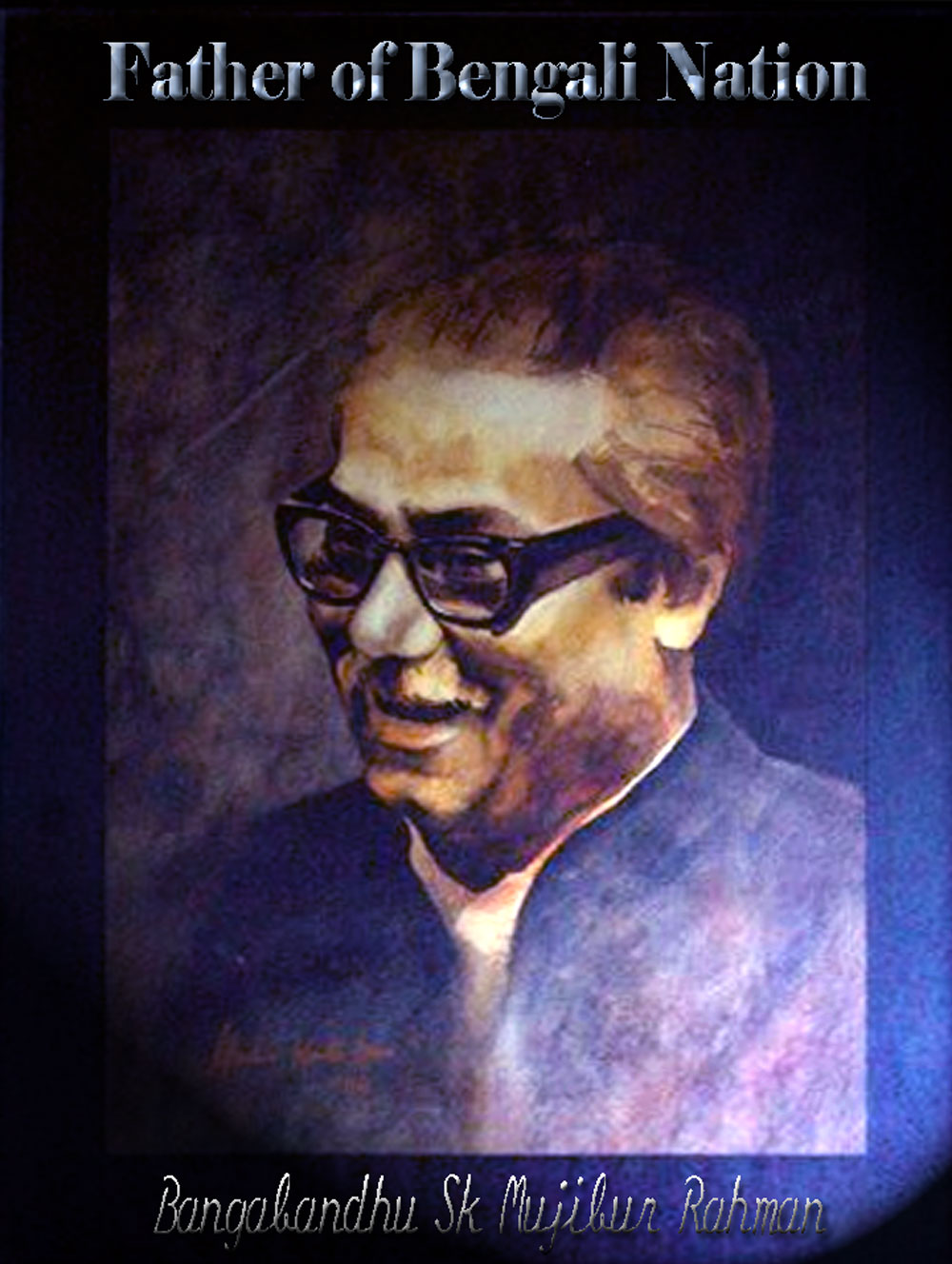
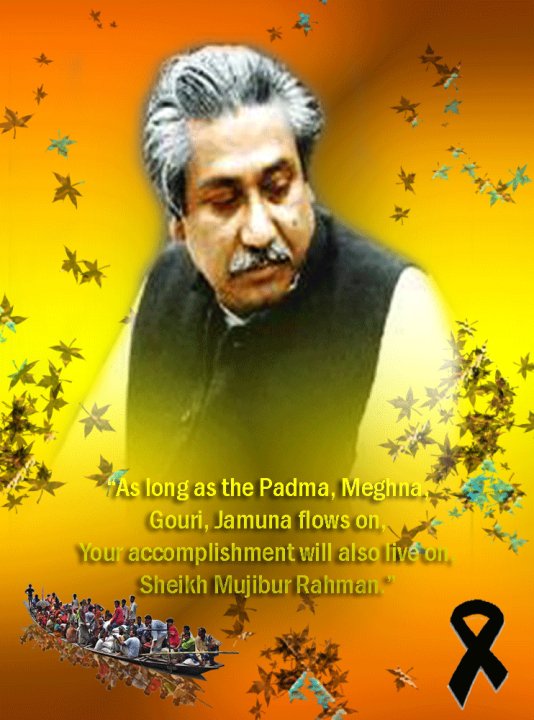
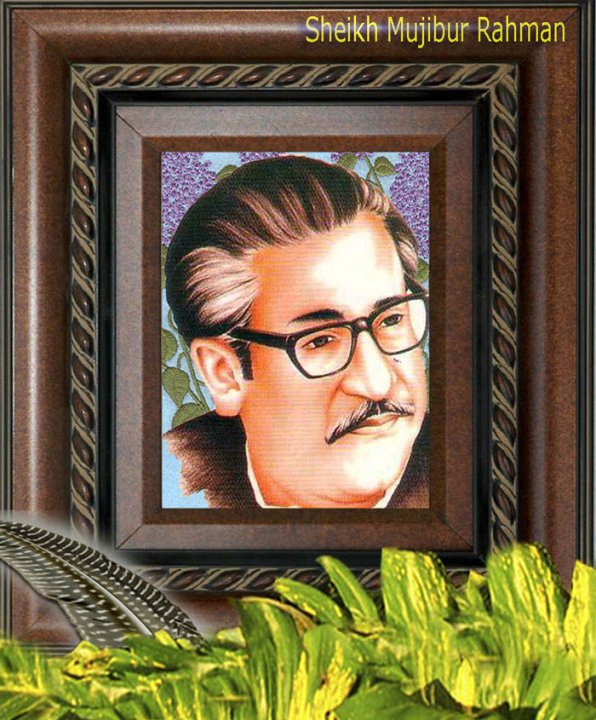
DECLARATION OF INDEPENDENCE BY BANGABANDHU AND THE FALSEHOOD OF BNP-JAMAT ALLIANCE BNP-Jamat Alliance has recently come up with an unbelievable and baseless claim that the then Major Zia proclaimed Independence of Bangladesh from Chittagong on 25th March 1971. This is a new invention after 33 years of independence which Zia himself did never claim in his lifetime. This is a blatant lie and concocted story coming out of fertile brains of BNP-Jamat leaders.
2. It is an universally accepted fact that the father of the Nation Bangabandhu Sheikh Mujibur Rahman declared independence on 26th March 1971 before his arrest. In his speech broadcast in Radio & TV the Chief of Military Junta General Yahya Khan accused Bangabandhu for this declaration. All contemporary historical records, facts, documents, writings, statements and sayings, both at home and abroad proved it beyond all doubts. For this declaration Bangabandhu had not only to face farcical trial in jail but even a grave was dug for him. Not only this, the diplomats & journalists of USA, UK and other western countries based in Dhaka at that time have all mentioned this declaration by Sheikh Mujib on 26th March 1971. Recently published CIA (USA) report has clearly stated that Bangabandhu Sheikh Mujibur Rahman declared independence. Even the Pakistani army officers had heard this declaration through BDR wireless (Ref. “Witness to Surrender” by Pakistani Army officer Major Siddik Salek). To this effect he gave witness to Hamudur Rahman commission constituted by Bhutto and this has been published in books and reports. Besides some members of Certifying Committee of “Documents on the war of Independence” published in 1982 by refuting the BNP-Jamat claim have again unequivocally stated that the declaration of the Independence by Sheikh Mujib was a proved document beyond any doubt. Most importantly after independence of the country Ziaur Rahman himself in his article published in the Weekly Bichitra mentioned that he joined the war of independence at the call of Bangabandhu.
3. The undisputed truth of Declaration of war of Independence by Bangabandhu Sheikh Mujibur Rahman in the early hours of 26th March (i.e., 25th March night- just before his arrest), 1971 was duly incorporated as historic documentation at the beginning of the 3rd volume of the 15 volumes of “Documents on the war of Independence.” These were published through a project in 1982 under the editorship of the famous Poet-cum-Journalist Late Mr. Hasan Hafizur Rahman and under the supervision of a “Certifying Committee” appointed during the Govt. of late Ziaur Rahman. On the basis of this declaration, the People’s Representatives formally adopted “The Proclamation of Independence Order of Bangladesh” on 10th April, 1971. But, to the utter surprise of the nation, the ministry of Freedom Fighter’s Affairs of the Alliance Govt. of Khaleda-Nizami has desperately and derogatorily deleted this historic declaration from the new edition of the same volume in the name of re-print. Not only this, they have inserted an imaginary and concocted document “First Declaration of Independence” on 25th March night of 1971 by Major Ziaur Rahman instead of the Declaration of Independence by Bangabandhu. Absolutely dominated by anti-liberation forces, the Govt. of Alliance committed this sort of mischief with the ulterior motive to distort the true history of the emergence of Bangladesh. Their such acts amount to violation of the constitution. As such, storms of protests are coming-up from amongst the living political leaders, bureaucrats, intellectuals, writers, journalists and teachers including the military commanders who actively participated in the war of liberation.
4. The following few historical facts will speak for itself :
(A). The declaration of independence of Bangladesh is not a sudden emotional announcement. It is the outcome of or an important stage of the continuous 23 year’s of our historic struggle for national liberation. Starting from the language movements (1948-52) through various movements and struggle such as, the Jukta Front (United Front) of 1958, 6-point movement of 1966, Agartala Conspiracy case up to mass upsurge in 1969 on 11-point programme, Bangabandhu Sheikh Mujibur Rahman made Bangalee’s autonomy demand into an irresistible and formidable one. Ayub Khan resigned and Yahya Khan took over Power and declared election.
(B). The Parliamentary election was held in 1970. Unprecedented and overwhelming victory of Awami League under the leadership of Bangabandhu in this election and administering Oath of the newly elected M.P’s openly in the Race course Maidan was a step forward towards our Independence.
(C). When the nation had been awaiting for a central Govt. headed by Sheikh Mujib and the Parliament Session on 3rd March, 1971, President Yahya Khan unilaterally postponed the session sine die even without consulting Sheikh Mujib. The above unilateral act of Yahya Khan ignited fire in the 75 million Bangalees. In order to embrace with the situation, Bangabandhu called for peaceful and non-violent non-cooperation movement. During the entire period of non-cooperation movement, the civil administration of erstwhile East Pakistan was virtually under the command and control of Bangbandhu. This was another step forward for independence.
(D). At the backdrop of this situation, the historic 7th March came. On that day Bangabandhu in a public meeting attended by millions held at Race Course Maidan called upon the people,
“The fight, this time, is for freedom !
The struggle, this time, is for independence.”
This famous speech of Bangabandhu is almost a declaration of Independence. But the wordings of his poetic speech were so thoughtfully and skillfully structured that the Pakistani’s as well as the outside world could not term it as an act of cessation or Separatist movement. The opportune moment for declaration of independence in unequivocal terms was not far away.
(E) Bangabandhu Knew that the Pak army would crack down on the Bangalees any time. So, he made-up his mind and decided to declare full Independence at an opportune moment. That would be the moment the Pak army would crack down on our Bangali population. Therefore, Bangabandhu got his Declaration of Independence recorded very confidentially with necessary instructions to those who would be pronouncing it at his behest. He also gave necessary directives to his trusted political colleagues about the next course of actions.
(F) On 25th March 1971, after a series of drama in the name of dialogues & discussions by the Pak Military Junta and Mr. Bhutoo with Sheikh Mujib and armed forces including Police & students, the Pak army cracked down after midnight on the civilian population with all their sophisticated arms & ammunitions and the moment came for Bangabandhu to declare independence.
(G) At that stage, Bangabandhu in the early hours of 26th March, 1971 (before his arrest) declared Independence of Bangladesh which reads as under :
“I appeal and order you all in the name of Almighty Allah to fight to the last drop of blood to liberate the country. Ask police, the E.P.R., the Bengal Regiment and the Ansars to stand by you and to fight. No compromise. Victory is ours.”
5. The above Declaration of Independence by Bangabandhu started transmitting immediately in the form of a message through a portable Transmitter by Subeder Major Md. Showkat Ali of E.P.R. signals installed at his Pilkhana residence. As soon as the message of declaration of Indepen- dence started transmitting, Bangabandhu was arrested by the Pak army at 1-10 A. M. of 26th March and flown to Karachi as a prisoner. Meanwhile, Subeder Major Shoukat Ali and his fellow comrades were caught red-handed by the Pak army exactly in the position of transmitting the Declaration of Independence. After arrest, these heroes of E.P.R. Signals were continuously and brutally tortured to martyrdom These facts were clearly narrated by the only daughter of Subeder Major Md. Showkat Ali Professor Dr. Selina Parveen, Department of Zoology, University of Rajshahi through her writings published in the Daily Janakhanta on 24th July, 2004 and in the Daily Sangbad on 31st March, 1997 including many other Journals at home and abroad.
6. According to the plan, the Declaration of Independence by Bangabandhu had started being announced through miking and leaflets as soon as this was received in Chittagong and in other places of the country including adjacent districts of Dhaka. On 26th March, Mr. M. A. Hannan, an Awami League leader of Chittagong received the message and he was the first person to read out Bangabandhu’s Declaration of Independence from Radio, Chittagong.
7. On the following day i.e., on 27th March evening, the then Major Zia the senior most officer available at that time while fleeing for life was forced by local Awami League Leaders to read out the Declaration of independence in the name of Bangabandhu in the following way :
“On behalf of our great leader, the Supreme Commander of Bangladesh Sheikh Mjibur Rahman, we hereby proclaim the Independence of Bangladesh.”
8. Major Zia also reiterated the same in one of his own writings published in the erstwhile Dainik Bangla on 26th March, 1972 which was re-published in the Independence Day edition of the Daily Janakhanta in 2002. The writings of Major Zia also has been supported by his co-fighters like Captain Shamser Mobin Chowdhury (now Foreign secretary), Captain Nasim B.B. (later on General and Chief of the Army Staff) and Captain S. A. Bhuiya (later on General). All these lead to one conclusion that the Father of the Nation Bangabandhu Proclaimed independence on 26th March 1971 and the war of liberation went on in his name and finally Bangladesh won its liberations after great sacrifice. Zia was not more than one of the sector Commanders.
9. Now let us examine the of BNP-Jamat claim for declaration of independence by Zia on 25th March :
(A) It is quite noteworthy that no other political or war colleague of Zia had ever claimed that Zia declared independence on 25th March 1971. Even before this Alliance Govt. came to power BNP did not also raise such baseless claim earlier. Rather the historical truth is that Zia as a loyal officer of Pakistani army was actively and zealously engaged on 25th & 26th March for unloading arms and ammunitions for Pakistani army from the ship ‘SWAT’ anchored at Chittagong port.
(B) In this connection it is also important to note that Ziaur Rahman had not to face any accusation from Pakistan for his so-called declaration of independence. Rather Pakistani rulers congratulated him for his appointment as chief of Army just after 8 days of the murder of Bangabandhu on 15th August 1975.
(C) Further during Bangabandhu’s lifetime when Zia was Dy. Chief of Army knowing fully well about 15th August conspiracy did not take any measure to protect the elected Govt. and did not do anything to save the life of the President (Bangabandhu) of the country. This was a treachery and failure on the part of Zia which could have called for his court-martial, which did not happen. The self proclaimed murderers of Bangabandhu had told that the murders of 15th August and the revolt happened with the full consent of Ziaur Rahman. And as a reward the murderer Khondoker Mustaq Ahmed appointed him Chief of Army within 8 days of the murder of Sheikh Mujib. This goes to prove that Zia himself was associated with the murder of Bangabandhu. He betrayed his president and his oath of allegiance.
(D) His disloyalty to nation and lust for power are quite evident from the following:
If, indeed, Zia had truly accepted war of freedom and remained faithful to the Principles and vows for freedom, he would not give indulgence to the murderers of Bangabandhu and would not reward them. Had he been a real freedom fighter, he would not have declared himself the President of Bangladesh illegally betraying the ideals and perception of freedom fight. He would not also change the constitution by military orders, appoint anti-liberation politicians in power, pardon Razakars by abolishing Collaborator’s Act, allow communal parties and give them opportunity to take part in politics and would not bring back war criminal Ghulam Azam and allow reorganize fundamentalist party the Jamate Islami.
(E) Last, but not the least, how can one imagine that the sudden call of an unknown Major in a radio can inspire a nation to rise and fight for freedom unless the ground was prepared for this. Here comes the name of Bangabandhu who worked for long 23 years to prepare the ground and united the nation for the great struggle and at his clarion call on 26th March 1971, the nation woke up and fought for independence till it was achieved.
10. The Declaration of Independence by Bangabandhu is the genesis of the Proclamation of Independence Order of Bangladesh on 10th March 1971. Since our constitution is framed on the basis and spirit of this proclamation, the declaration of Independence has become an integral part of the constitution. It basically became an interim Constitution and gave legitimacy to Revolutionary Mujib Nagar Govt. formed with Bangabandhu Sheikh Mujibur Rahman as the President, and Supreme Commander of all Forces, Syed Nazrul Islam as Acting President, Taj Uddin Ahmed as the Prime Minister. Major Zia acted as a sector Commander only. The Fourth Schedule is very important. This Schedule is related to “Transitional and temporary Provisions” of the constitution which includes the Proclamation of Independence. As regards this Schedule, Article 150 of the Constitution states “the Transitional and temporary Provision, set out in the fourth Schedule shall have effect notwithstanding any other Provisions of this constitution.” On the otherhand, the proclamation of Independence has been included as Appendix I of the constitution.
11. So, it is an established and recognized fact that nobody, but Bangabandhu Sheikh Mujibur Rahman declared the Independence of Bangladesh which has been duly incorporated in the constitution. Moreover nobody other than Bangabandhu had the legitimate right to and he did declare the Independence of Bangladesh. Therefore, the attempt of the Govt. of Alliance by incorporating the fake & false declaration by Major Zia is a violation of the constitution.
12. Now it is clear that the claim of the BNP-Jamat Govt. regarding Declaration of Independence by Major Zia is a sheer lie and an attempt to distort the true history. Such a lie is undoubtedly a great sin & these would be made accountable to the people who has already rejected their false, fabricated and concocted claim.
13. From the above discussion it is clear that the Khelada-Nizami’s Govt. aim is not only to establish Zia as the proclaimer of Independence. Their real object is to show the independence as disputed, illegal and unlawful by proving Bangaldesh’s independence war as a mere mutiny or revolt of armies. If it can be proved that Bangbandhu did not proclaim independence on 26th March then the Declaration of Independence on 10th April 1971 becomes illegal and Mujib Nagar Govt. does not have any constitutional basis. By the false claim that Zia declared independence on 26th March, they want to mislead the people and according to the demand of the defeated foes of Bangladesh and collaboraters of Pakistani forces the Khaleda-Nizami Govt. by amending Constitution, changing national flag and anthem wish to make Bangladesh a theocratic and communal state. With this far-reaching aim they have taken move to change history and resorted to distortion With the same object in mind their conspiracy to deface the name of Banganbdhu from the history of nation and destroy the Awami League, have been continuing. The introduction of distorted history of independence and war of Independence in the text books is not an isolated issue. It is a part of a big game.
Published by Freedom Fighter Moktel Hossain Mukthi
http://shomoy71.blogspot.com/
http://august75tragedy.blogspot.com/
http://extremistinbangladesh.blogspot.com/
http://theunfinishedmemoirs.blogspot.com/
http://bdslumdogmillionaire.blogspot.com/
http://daughterofdemocracy.blogspot.com/
http://mujibnagar71.blogspot.com/
http://shomoyekattur.blogspot.com/
http://myhomemyglory.blogspot.com/
http://mukthiibangalee.blogspot.com/
http://godfathertareqzia.blogspot.com/
http://burningbengalination.blogspot.com/
http://joydigitalbangla.blogspot.com/
http://thetrueteller.blogspot.com/
http://bangabandhuporisadmv.blogspot.com/
http://notesofmukthi.blogspot.com/
http://lifeandliability.blogspot.com/
http://maldivesawamijuboleague.blogspot.com/
http://muktimadaripuri.blogspot.com/
http://moktelhossainmukthi.blogspot.com/
http://moktelhossainmukthi.weebly.com/
http://narrowpolitics.blogspot.com/
http://bdawamileague.wordpress.com/
http://creationofmukthi.blogspot.com/
http://misrulesofbnpjamat.wordpress.com/
http://en.netlog.com/Muktishena71/
http://masterminds75.webs.com/
http://sheikhhasina.blog.com/
http://skhasinawajed.blogspot.com/
http://deshratna.weebly.com/
http://sheikhhasina.webs.com/
http://bangladeshstudentleague.blog.com/
http://advskhatun.webnode.com/
http://daughterofthedemocracy.blogspot.com/
http://bangabandhuporisadmv.blogspot.com/
http://thegreatestbangalee.blogspot.com/
http://theburningnation.weebly.com/
http://jathirpitha.wordpress.com/
http://skmujiburrahman.blogspot.com/
http://bangabandhu.weebly.com/
http://swadhinbangla.webs.com/
http://amibangalee.webs.com/
http://bangabandhuporisad.webs.com/
http://bangabandhu.webs.com/
http://august75tragedy.blogspot.com/
http://thefatherofnation.blogspot.com/
http://mujibshena.blogspot.com/
http://charterofchange.blogspot.com/
http://bangladeshawamileague.blog.com/
http://bangladeshawamileague.webs.com/
http://worldawamileague.blogspot.com/
http://charterofchange.blogspot.com/
http://charterofchange2021.blogspot.com/
http://digitalbangladesh.blog.com/
http://thepatriotism.blog.com/
http://bdpolitics.blog.com/
http://mukthi.tumblr.com/archive
http://mukthi.tumblr.com/muktimusician
http://thegenerationnext.webs.com/
http://thefutureleaderjoy.wordpress.com/
http://thefutureleader.webnode.com/
http://jajaborpakhi.blog.com/
http://muktimusician.livejournal.com/
http://moktelhossainmukthi.blog.com/
http://mukthi.xanga.com/
http://muktimusician.blog.co.in/
http://www.ustream.tv/channel/moktel-hossain-mukthi
http://muktirpata.blogspot.com/
http://muthirpachali.blogspot.com/
http://mukthimadaripuri.blog.co.in/
http://amarmonmanena.webs.com/
http://mukthi.webnode.com/
http://muktirpata.weebly.com/
http://khasherhat.blogspot.com/
http://soundcloud.com/muktimusician
http://muktimusician.multiply.com/
http://muktimusician.xanga.com/
http://muktimusician.dinstudio.com/
http://muktishena71.typepad.com/
http://muktishena71.webnode.com/
http://muktimusician.typepad.com/
http://muktimusician.posterous.com/
http://amramujibshena.blog.com/
http://muktimusician.blog.com/
http://muktimusician.stumbleupon.com/
http://muktimadaripuri.blogspot.com/
http://muktimusician.blogspot.com/
http://mukthircollection.blogspot.com/
http://muktimusician.photobucket.com/
http://bentio.com/muktimusician
http://muktimusician.wordpress.com/
http://muktishena71.bloggy.se/
http://bd.linkedin.com/in/muktimusician
http://mukthirpachali.blog.com/
http://muktimusician.myblogsite.com/
http://friendfeed.com/muktimusician
http://muktimusicina.twitpic.com/
http://muktimusician.mediashare.com/
http://freedomfighters71.blogspot.com/
http://muktimusician.imgur.com/
http://muktimusician.picturepush.com/
http://community.webshots.com/user/muktimusician
http://hawabhaban.blog.com/
http://misrulesofbnpjamat.webnode.com/
http://misrulesofbnpjamat.blogspot.com/
http://warcrime1971.webs.com/
http://warcrime1971.blogspot.com/
http://warcrime1971.weebly.com/
http://khaledaziaandrazakars.wordpress.com/
http://warcriminalsinbangladesh.wordpress.com/
http://warcriminalsinbangladesh.blogspot.com/
http://warcriminalnizami.blogspot.com/
http://warcriminalsakachoudhury.blogspot.com/
http://godfathertareqzia.blogspot.com/
http://nospaceforwarcriminal.blogspot.com/
http://razakarnizami.blogspot.com/
http://barristertaposhfanclub.blogspot.com/
http://en.wikipedia.org/wiki/Muktimusician
http://blogtown.co.nz/muktimusician/
http://priyo.com/muktimusician
http://en.netlog.com/Muktishena71
www.thoughts.com/muktimusician
www.myspace.com/muktimusician
www.orkut.com/warcriminalsinbangladesh
www.warcriminalsinbangladesh.hi5.com
www.netlog.com/muktimusician
www.blogigo.co.uk/muktimusician
www.picasaweb.com/muktimusician
www.orkut.com/muktimusician
www.muktimusician.hi5.com
www.tagged.com/mukthimadaripuri
www.tagged.com/amibangali
www.tagged.com/muktimusician
www.tagged.com/deshratna
www.tagged.com/muktithegreat
www.tagged.com/amibangali
www.squidoo.com/muktimusician
www.youtube.com/muktimusician
www.shtyle.fm/muktimusician
www.myspace.com/muktimusician
www.orkut.com/muktimusician/
http://vodpod.com/muktimusician
www.quepasa.com/muktimusician
www.caringbridge.org/muktimusician
www.bebo.com/muktimusician
www.hibuu.com/muktimusician
www.twitter.com/muktimusician
www.zimbio.com/member/muktimusician
www.blogigo.co.uk/muktimusician
www.playlist.com/muktimusician
www.youtube.com/muktisena71
www.youtube.com/nizami71
www.youtube.com/muktimusician
www.dailymotion.com/muktimusician
www.facebook.com/deshratna2009
www.facebook.com/jatirjanokbangabandhu
www.facebook.com/thebrokenbackbone
www.facebook.com/proggasrijanikhelaghor
www.facebook.com/bangabandhu.parisod
www.facebook.com/durnithi.rajnithi
www.facebook.com/shadhinatha
www.facebook.com/deshratna2009
www.facebook.com/sheikhrussellrahman
www.facebook.com/bnpjamat20012006
www.facebook.com/mukthijajabor
www.facebook.com/pakifannydogs
Email ID:
muktimusician@gmail.com
muktimusician@usa.com
muktimusician@europe.com
muktibhai@hotmail.com
mukthimadaripuri@gmail.com
muktimadaripuri1953@yahoo.com
muktishena71@gmail.com
mujibshena@yahoo.com
deshratna2009@gmail.com
muktisena71@yahoo.com
m.ukthi@live.com
sheikhrussell@live.com
Mukti Bahini (Ekatturer beer shenanee) "Liberation Army"), also termed as the "Freedom Fighters" or FFs, was a guerrilla force which fought against the Pakistan Army during the Bangladesh Liberation War in 1971.
Mukti Bahini (Bengali: মুক্তি বাহিনী "Liberation Army"), also termed as the "Freedom Fighters" or FFs, collectively refers to the armed organizations who fought against the Pakistan Army during the Bangladesh Liberation War. It was dynamically formed by (mostly) Bengali regulars and civilians after the proclamation of Bangladesh's independence on March 26, 1971. Subsequently by mid-April 1971 the Bengali officers and soldiers of East Bengal Regiments formed the "Bangladesh Armed Forces" and M. A. G. Osmani assumed its command. The civilian groups continued to assist the armed forces during the war. After the war "Mukti Bahini" became the general term to refer to all forces (military and civilian) of former East Pakistani origin fighting against the Pakistani armed forces during the Bangladesh Liberation War. Often Mukti Bahini operated as an effective guerrilla force to keep their enemies on the run. Inspired in part by revolutionary Che Guevara,[1] they have been compared to the French Maquis, Viet Cong, and the guerrillas of Josip Broz Tito in their tactics and effectiveness.[2]
Contents [hide]
1 Origins
2 Organization during war
3 Regular and irregular forces
3.1 Bangladesh Navy
3.2 Bangladesh Air Force
3.3 Independent forces
3.4 Leftist factions
4 Broadcast warriors
5 Sectors of Liberation War
6 Mukti Bahini in the final phase
7 See also
8 References
9 Further reading
10 External links
[edit]Origins
Although Mukti Bahini was formed to fight off the military crackdown by the Pakistan army on March 25, 1971 during the climax of Bangladesh freedom movement, The crisis had already started taking shape with anti-Ayub uprising in 1969 and precipitated into a political crisis at the height of Sheikh Mujibur Rahman's Six-point movement beginning in the 1970s. In March 1971, rising political discontent and cultural nationalism in what was then East Pakistan (later, Bangladesh) was met by harshsuppressive force from the ruling elite of the West Pakistan establishment in what came to be termed Operation Searchlight.
The massive crackdown by West Pakistan forces became an important factor in precipitating the civil war as a sea of refugees (estimated at the time to be about 10 million) came flooding to the eastern provinces of India.Facing a mounting humanitarian crisis, India started actively aiding and re-organising what was by this time already the nucleus of the Mukti Bahini.
The immediate precursor of the Mukti Bahini was Mukti Fauj ("Fauj" is the Urdu originally from Persian borrowed from Arabic for "Brigade" exported into several languages in South Asia including Bengali), which was preceded denominationally by the sangram parishads formed in the cities and villages by the student and youth leaderships in early March 1971. When and how the Mukti Fauj was created is not clear nor is the later adoption of the name Mukti Bahini. It is, however, certain that the names originated generically refer to the people who fought in the Bangladesh liberation war.
Since the anti-Ayub uprising in 1969 and during the height of Mujib's six points movement, there was a growing movement among the Bengalis in East Pakistan to become independent driven by the nationalists, radicals and leftists. After the election of 1970, the subsequent crisis strengthened that feeling within the people. Sheikh Mujib himself was facing immense pressure from most prominent political quarters, especially the ultra-nationalist young student leaders, to declare independence without delay. Armed preparations were going on by some leftist and nationalist groups, and the Bengali army officers and soldiers were prepared to defect. At the call of Sheikh Mujibur Rahman the people of East Pakistan joined in a peaceful movement for non-cooperation from 3 March 1971, and 7th march and onward, which lasted up to midnight of 25 March 1971. On this date the Pakistani Army cracked down upon unarmed civilians to take control of the administration. During the army crackdown on the night of March 25, 1971, there were reports of small scale resistance notably at Iqbal Hall, Dhaka University and at the Rajarbagh Police Headquarter. The latter initially put a strong fight against the Pakistan Army. As political events gathered momentum, the stage was set for a clash between the Pakistan Army and the Bengali people vowing for independence. Bengali members of the Army were also defecting and gathering in various pockets of the country.
All these early fights were disorganized and futile because of the greater military strength of the Pakistani Army. Outside of Dhaka, resistance was more successful. The earliest move towards forming a liberation army officially came from the declaration of independence made by Major Ziaur Rahman of East Bengal Regiment on behalf of Sheikh Mujibur Rahman. In the declaration made from Kalurghat Betar Kendra (Chittagong) on March 27, 1971, Zia assumed the title of "provisional commander in chief of the Bangladesh Liberation Army", though his area of operation remained confined to Chittagong and Noakhali areas. Major Ziaur Rahman's declaration on behalf of Sheikh Mujibur Rahman marked a break with Pakistan by the Bengali units of the army.
[edit]Organization during war
See Also: Mujibnagar Government
Though prolonged Bengali resistance was not anticipated by Pakistani planners of Operation Searchlight,[9], when the Pakistani Army cracked down upon the population, the Mukti Bahini were becoming increasingly visible. Headed by Colonel (later, General) M. A. G. Osmani, a retired Pakistani Army officer, this band was raised as Mujib's action arm and security force before assuming the character of a conventional guerrilla force. After the declaration of independence, the Pakistani military sought to quell them, but increasing numbers of Bengali soldiers defected to the underground "Bangladesh army". These Bengali units slowly merged into the Mukti Bahini and bolstered their weaponry.
On April 12, 1971 Colonel (later General) M. A. G. Osmani assumed the command of armed forces at Teliapara (Sylhet) headquarters. Osmani was made the commander-in-chief of Bangladesh Armed Forces on April 17, 1971. Serious initiative for organising the Bangladesh liberation army was taken between 11-17 July. In a meeting of the sector commanders in Kolkata, four important resolutions were taken in consideration of strategic aspects of the war, existing problems and future course of resistance. These were:
Composition and tactics of the combatants would be as follows:
Guerrilla teams comprising 5 to 10 trained members would be sent to specific areas of Bangladesh with specific assignments
Combat soldiers would carry out frontal attacks against the enemy. Between 50 and 100 per cent would carry arms. Intelligence volunteers would be engaged to collect information about the enemy. 30 percent of these people would be equipped with weapons;
The regular forces would be organised into battalions and sectors.
The following strategies would be adopted while carrying out military operations against the enemy
A large number of guerrillas would be sent out inside Bangladesh to carry out raids and ambushes;
Industries would be brought to a standstill and electricity supply would be disrupted;
Pakistanis would be obstructed in exporting manufactured goods and raw materials;
Communication network would be destroyed in order to obstruct enemy movements;
Enemy forces would be forced to disperse and scatter for strategic gains;
The whole area of Bangladesh would be divided into 11 sectors.
Other than the organizations of Mukti Bahini who were generally trained and armed by the Indian Army, there were independent guerrilla groups led by individual leaders, either nationalists or leftists, who were successfully controlling some areas.
Regular and irregular forces
Leaflets and pamphlets played an important role in driving public opinion during the war.
The regular forces later called Niomita Bahini (regular force) consisted of the members of the East Bengal Regiments (EBR), East Pakistan Rifles (EPR, later BDR), police, other paramilitary forces and the general people who were commanded by the army commanders in the 11 sectors all over Bangladesh. Three major forces: Z-Force under the command of Major (later, Major General) Ziaur Rahman, K-Force under Major (later Brigadier ) Khaled Mosharraf and S-Force under Major (later Major General) K M Shafiullah were raised afterwards to fight battles in efficient manners. The irregular forces, generally called Gono Bahini (people's army), were those who were trained more in guerrilla warfare than the conventional one.
The irregular forces, which after initial training joined different sectors, consisted of the students, peasants, workers and political activists. Irregular forces were initiated inside Bangladesh province to adopt guerrilla warfare against the enemy. The regular forces were engaged in fighting the usual way.
The Mukti Bahini obtained strength from the two main streams of fighting elements: members of armed forces of erstwhile East Pakistan and members of the urban and rural youths many of whome were volunteers. Other groups included members of sangram parishads, youth and student wings of Awami League, NAP, Leftist-Communist Parties and radical groups. The Mukti Bahini had several factions. The foremost one was organized by the members of the regular armed force, who were generally known as Freedom Fighters (FF). Then there was Bangladesh Liberation Forces (BLF) led by four youth leaders of the political wing of Sheikh Mujib's Awami League and the third one generally known as Special Guerrilla Forces (SGF) led by the Communist Party of Bangladesh, National Awami Party, and Bangladesh Students Union. They then jointly launched guerrilla operations against the Pakistani Army causing heavy damages and casualties. This setback prompted the Pakistani Army to induct Razakars, Al-Badrs and Al-Shams (mostly members of Jamaat-e-Islami and other Islamist groups), as well as other Bengalis who opposed independence, and Biharis who had settled during the time of partition. This helped Pakistan stem the tide somewhat as the monsoon approached in the months of June and July.
[edit]Bangladesh Navy
Bangladesh Navy was constituted in August 1971. Initially, there were two ships and 45 navy personnel. These ships carried out many successful raids on the Pakistani fleet. But both of these ships were mistakenly hit and destroyed by Indian fighter planes on 10 December 1971, when they were about to launch a major attack on Mongla seaport.
[edit]Bangladesh Air Force
Bangladesh Air Force started functioning on 28 September at Dimapur in Nagaland, under the command of Air Commodore AK Khondakar. Initially, it consisted of 17 officers, 50 technicians, 2 planes and 1 helicopter. The Air Force carried out more than twelve sorties against Pakistani targets and was quite successful during the initial stages of the Indian attack in early December.
[edit]Independent forces
In addition, there were also some independent forces that fought in various regions of Bangladesh and liberated many areas. These included Mujib Bahini which was organized in India. Major General Oban of the Indian Army and Student League leaders Serajul Alam Khan, Sheikh Fazlul Haque Mani, Kazi Arif Ahmed, Abdur Razzak, Tofael Ahmed, A. S. M. Abdur Rab, Shahjahan Siraj, Nur E Alam Siddiqi, and Abdul Quddus Makhon were organisers of this Bahini. There was the Kaderia Bahini under Kader Siddique of Tangail, Afsar Bahini and Aftab Bahini of Mymensingh, Latif Mirza Bahini of Sirajganj, Akbar Hossain Bahini of Jhinaidah, Quddus Molla and Gafur Bahini of Barisal, Hemayet Bahini under Hemayet Uddin of Faridpur. There were also several communist/leftist groups who clashed with the Pakistan Army, and controlled some areas independently.
[edit]Leftist factions
In addition,there were some other groups of freedom fighters which were controlled by the Leftist parties and groups including the NAP and Communist Parties. Among others, Siraj Sikder raised a strong guerrilla force which fought several battles with the Pakistani soldiers in Payarabagan, Barisal. Although there were ideological conflicts among the communist parties (most notably, split into pro-soviet and pro-Chinese factions and widespread split within the pro-Chinese faction) on deciding a common action in the context of Bangladesh Liberation, many of the individuals and leaders of Mukti Bahini were deeply influenced by the leftist ideology in general. There were strong concerns among the Indian authority and members of the Awami League led provisional government not to lose the control of the liberation war to the leftists. Nevertheless many leftists overcame these internal and external difficulties and actively participated in the Liberation war with the main nucleus of the Mukti Bahini.
Broadcast warriors
Performers at Swadhin Bangla Betar Kendra like M. R. Akhtar Mukul, Apel Mahmud Gopal C. Talukder (Singer), Abdul Jabbar (Singer), Mohammad Shah were great inspirations for the freedom-fighters in 1971, and were considered to be Broadcast Warriors.
Sectors of Liberation War
The eleven sectors
Main article: List of Sectors in Bangladesh Liberation War
Immediately after formation, the new government of Bangladesh shifted its focus on organizing the war against Pakistan Army. A Cabinet meeting of Bangladesh government on July 11, 1971 appointed Col. M. A. Gopal. Osmani as Commander in Chief, Lt. Col. Abdur Rab as Chief of Army Staff and Group Captain A K Khandker as Deputy Chief of Army Staff and Chief of Air Force.
In this meeting Bangladesh was divided into Eleven Sectors and each Sector was assigned a Sector Commander. The 10th Sector was directly placed under the Commander in Chief (C-in-C) and included the Naval Commandos and C-in-C’s special force.
The Sector Commanders were chosen from defected officers of Pakistan army who joined the Mukti Bahini. These trained officers directed the guerrilla warfare as well as trained the independence militia who lacked formal training on military operations. Most of these training camps were situated near the border area and were operated with direct assistance from India.
For better efficiency in combat operations, each of the sectors were divided into a number of sub-sectors. The table below provides a list of the sectors along with the name of the sector commanders.
Sectors of Bangladesh Liberation War
Sector Area Sector Commander
1 Chittagong District, Chittagong Hill Tracts, and the entire eastern area of the Noakhali District on the banks of the river Muhuri. Major Ziaur Rahman, later replaced by Major Rafiqul Islam
2 Districts of Dhaka, Comilla, Faridpur, and part of Noakhali District. Major Khaled Mosharraf, later replaced by Major ATM Haider
3 Area between Churaman Kathi (near Sreemangal) and Sylhet in the north and Singerbil of Brahmanbaria in the south. Major KM Shafiullah, later replaced by Major ANM Nuruzzaman.
4 Area from Habiganj District on the north to Kanaighat Police Station on the south along the 100 mile long border with India. Major Chittarajan Datta, later replaced by Captain A Rab.
5 Area from Durgapur to Danki (Tamabil) of Sylhet District and the entire area up to the eastern borders of the district. Major Mir Shawkat Ali
6 Rangpur District and part of Dinajpur District. Wing Commander M Khademul Bashar
7 Rajshahi, Pabna, Bogra and part of Dinajpur District. Major Nazmul Huq, later replaced by Subedar Major A Rab and Kazi Nuruzzaman.
8 In April 1971, the operational area of the sector comprised the districts of Kushtia, Jessore, Khulna, Barisal, Faridpur and Patuakhali. At the end of May the sector was reconstituted and comprised the districts of Kuhstia, Jessore, Khulna, Satkhira and the northern part of Faridpur district. Major Abu Osman Chowdhury, later replaced by Major MA Manzur.
9 Barisal, Patuakhali, and parts of the district of Khulna and Faridpur. Major M A Jalil later replaced by Major MA Manzur and Major Joynal Abedin.
10 This sector was constituted with the naval commandos. Indian commander MN Sumanta.
11 Mymensingh and Tangail. Major M Abu Taher, later replaced by Squadron Leader Hamidullah.
Source: Sectors of the War of Liberation; Shirin, S. M.; Banglapedia.
[edit]Mukti Bahini in the final phase
The liberation forces started carrying out massive raids into enemy fronts from October 1971. After the signing of the Indo-Soviet Treaty in August 1971, India began to demonstrate more interest in the Bangladesh war. Eventually India legally entered the war on 3 December 1971 (Indo-Pakistani War of 1971) after Pakistan's preemptive air raids on some Indian cities in the western border. In fact, the Indian soldiers were already participating in the war in different guises since November when the independence fighters had launched the Belonia battle. When the Indian Army planned to avoid battles and seize the capital Dhaka in the shortest campaign possible, the Mukti Bahini made the task much easier by confining the Pakistani army and holding them back from moving towards to capital.
Despite the difficult terrain of Bangladesh, the war was won rapidly. Dhaka was liberated in a matter of two weeks. The Mukti Bahini were a major contributing factor in the Indian Victory fighting both as irregulars, and as conventional forces alongside the Indians. Several actions in the heart of the capital and the killing of Monaem Khan, a loyalist, anti-Bengali and ex-governor of East Pakistan, proved the effectiveness and capability of the guerrillas.
On 16 December 1971, commander of the 14 division of Pakistan army Major General Jamshed surrendered to Indian General Nagra near Mirpur bridge in Dhaka. At 10.40 am, the Indian allied force and Kader Siddique entered Dhaka city. That signaled the end of the 9-month long War of Liberation of Bangladesh. Scattered battles were still waged at various places of the country.
The Commander of Eastern Command of the Pakistan Army, Lt. General A. A. K. Niazi surrendered to the commander of the joint Indo-Bangladesh force and the chief of Indian eastern command Lt. General Jagjit Singh Arora. The Bangladesh Forces were represented at the ceremony by Group Captain A. K. Khandker.
[edit]See also
Mitro Bahini
^ Dangerous Liaison by Raza Naeem, Frontline, Volume 26 - Issue 15, July 18–31 2009
^ Why the Movement for Bangladesh Succeeded: A military appreciation by Mumtaz Iqbal
^ Genocide in Bangladesh, 1971. Gendercide Watch.
^ Emerging Discontent, 1966-70. Country Studies Bangladesh
^ Anatomy of Violence: Analysis of Civil War in East Pakistan in 1971: Military Action: Operation Searchlight Bose S Economic and Political Weekly Special Articles, October 8, 2005
^ The Pakistani Slaughter That Nixon Ignored , Syndicated Column by Sydney Schanberg, New York Times, May 3, 1994
^ a b Crisis in South Asia - A report by Senator Edward Kennedy to the Subcommittee investigating the Problem of Refugees and Their Settlement, Submitted to U.S. Senate Judiciary Committee, November 1, 1971, U.S. Govt. Press.pp6-7
^ India and Pakistan: Over the Edge. TIME Dec 13, 1971 Vol. 98 No. 24
^ Pakistan Defence Journal, 1977, Vol 2, p2-3
^ Bangladesh Liberation Armed Force, Liberation War Museum, Bangladesh.
Jagjit singh Arora
Edit
Other Names
একাত্তুরের মুক্তিসেনা
Options
Nickname · Shown at top of profile
সময় একাত্তুর
Options
Nickname
muktimusician
Options
Nickname
তবু মনে রেখো
Options
Other
Add a nickname, a birth name...
Favorite Quotes
Ami Fashir Monce DaRie Bolbo " aMi BangaLi, BangLa aMar VaSha, AmaR DeSh, BangLaDesh" Sheikh Mujibur Rahman"
আমি ফাঁসির মঞ্চে দারীয়ে বলবো " আমি বাঙালি, বাংলা আমার ভাষা, আমার দেশ- বাংলাদেশঃ শেখ মুজিবুর রহমান
"রাজাকার হওয়া সহজ
মুক্তিযোদ্ধা থাকাই বড় কঠিন"
View all posts by Freedom Fighter Moktel Hossain Mukthi



 তা সত্বেও পয়ত্রিশ জনপশ্চিম পাকিস্তানী সদস্যএলেন। কিন্ত পয়লা মার্চইয়াহিয়া খান পরিষদেরঅধিবেশন বন্ধ করেদিলেন। দোষ দেয়া হলো,বাংলার মানুষকে, দোষদেয়া হলো আমাকে, বলাহলো আমার অনমনীয়মনোভাবের জন্যই কিছুহয়নি।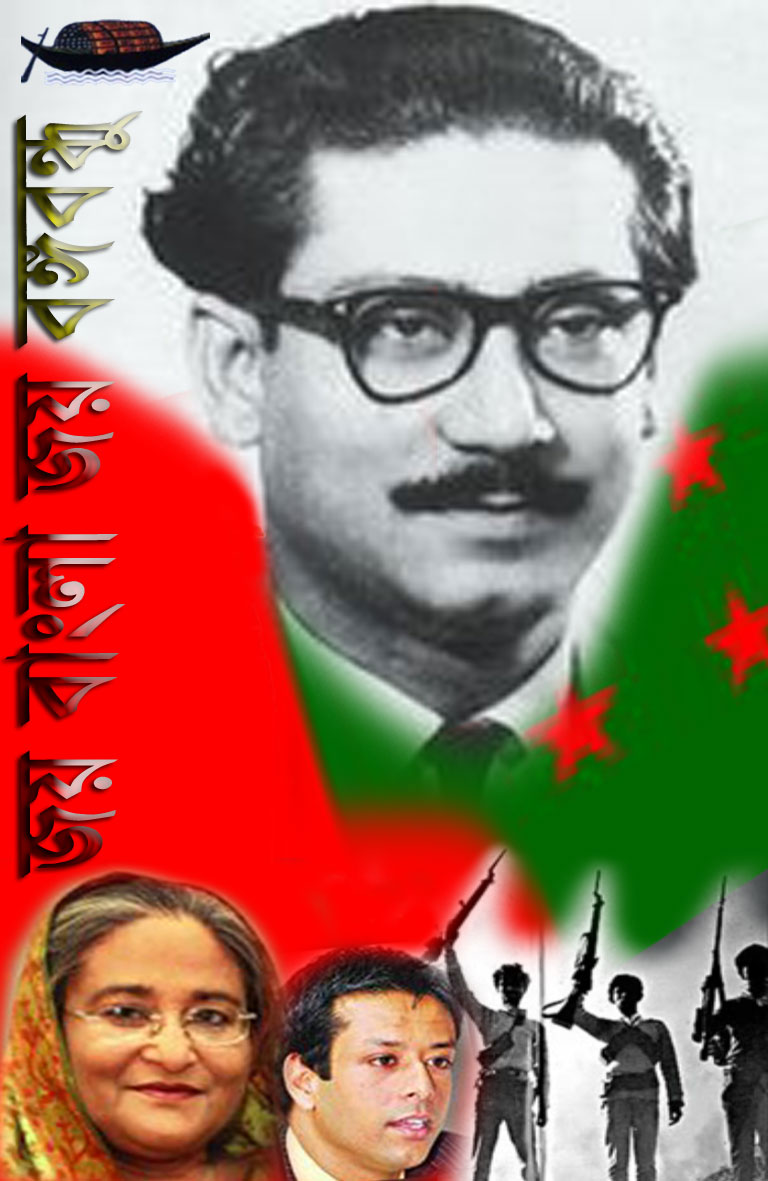
 BNP-Jamat Alliance has recently come up with an unbelievable and baseless claim that the then Major Zia proclaimed Independence of Bangladesh from Chittagong on 25th March 1971. This is a new invention after 33 years of independence which Zia himself did never claim in his lifetime. This is a blatant lie and concocted story coming out of fertile brains of BNP-Jamat leaders.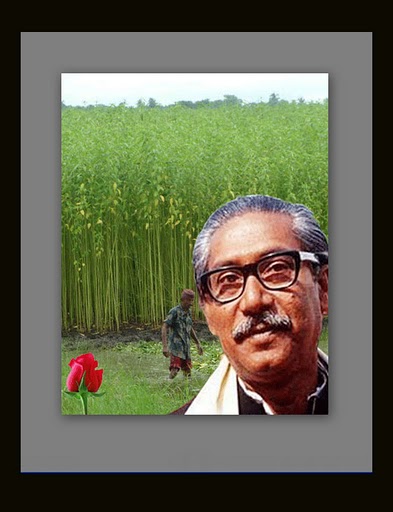

 নষ্ট ভ্রষ্ট আমরা বাঙ্গালী জাতি